
With the explosive growth of AI, data centers are undergoing a structural transformation. The "Dark Data Center" (or "Lights-Out Data Center") has moved into the spotlight. By leveraging highly automated and intelligent systems, these facilities operate stably in an unstaffed state, embodying a new operational philosophy: unmanned yet auditable, automated yet reliable, and lights-out yet more secure.
Why the Dark Data Center is becoming the trend
The concept of the Dark Data Center first emerged around 2012 with the maturation of DCIM (Note 1) software. However, the shift from concept to mainstream trend is driven by the stark differences between AI data centers and their traditional counterparts.
1. High Power Density and Precision Thermal Management
In the AI era, data centers have evolved from simple server rooms into high-power-density "AI factories," where liquid cooling has become standard. Liquid cooling systems are equipped with vast arrays of sensors to monitor flow, temperature, pressure, and leakage. This sophisticated architecture provides the technical foundation for unmanned management.
2. Widespread Deployment of Edge Nodes
As autonomous vehicles and robotics advance, computing demand is extending to the edge. Facing a massive number of distributed edge nodes, unmanned operation is no longer an option, it is an operational necessity.
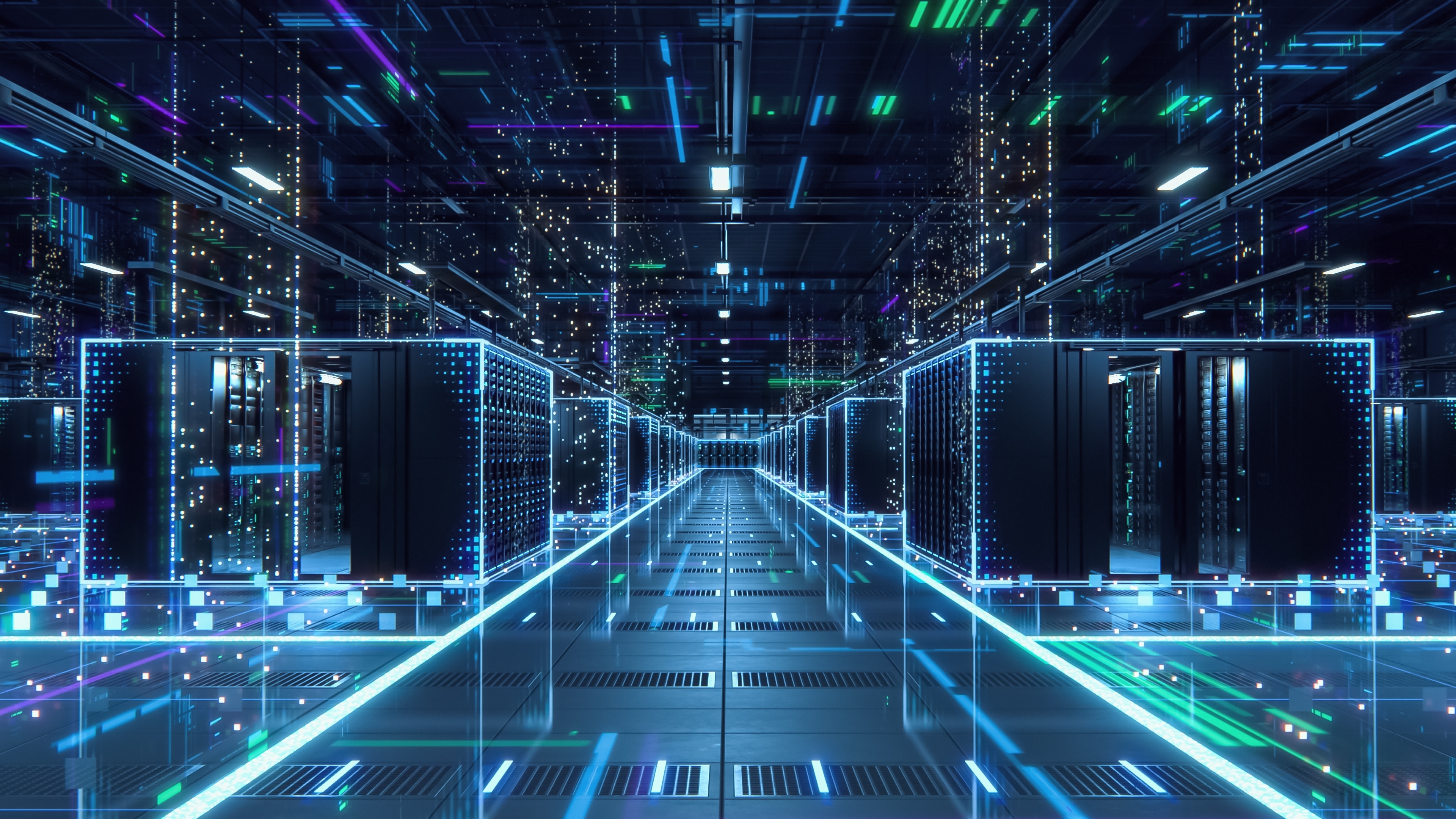
Explosive growth of AI brings the "Dark Data Center" into the spotlight.
Integrating unmanned operations: From reactive to proactive
Operations in a Dark Data Center are shifting from the reactive repairs of the past to a proactive, predictive model. This transition relies on the deep integration of two major domains.
1. The information foundation: Integration of DCIM and BMS (Note 2)
The first step toward unmanned management is breaking down information silos. By integrating DCIM (covering IT, power, and cooling) with BMS (covering building management, fire safety and security), data is synchronized in real-time, ensuring total transparency across the facility.
2. The intelligent brain: Digital Twins and AIOps (Note 3)
While a Digital Twin acts as a virtual mirror of the physical site for dynamic simulation, AIOps (Artificial Intelligence for IT Operations) serves as the brain, utilizing deep learning algorithms for analysis and decision-making. Together, they provide four core capabilities:
(1) Virtual simulation and what-if analysis: Before deploying new equipment or changing configurations, the system simulates the impact on power, IT, and cooling. Using CFD (Note 4)thermal simulations, it can pinpoint airflow and hotspots, allowing for risk assessment and stress testing before any physical changes are made.
(2) Predictive maintenance: By utilizing telemetry data, the system proactively predicts the lifespan of components. Operators can identify anomalies and failing equipment before a breakdown occurs, turning reactive maintenance into active prevention.
(3) Capacity planning and optimization: Automated hardware inventories identify idle rack space to maximize utilization. Simultaneously, the system monitors environmental data to dynamically adjust cooling to match the actual load, achieving precise heat dissipation.
(4) Automated operations and remote management: Once a change passes simulation, the system automatically generates execution commands. Through closed-loop management, human error is minimized. Operators can achieve 360-degree, full-spectrum visualized remote management through the Digital Twin.
Reshaping the data center landscape
According to Uptime Institute research (Note 5), the primary drivers for adopting AI-driven operations include improved deployment efficiency, reduced human error, increased productivity, better IT performance, and lower downtime risk. Propelled by the AI wave, data centers have evolved from infrastructure that merely hosts computing power into intelligent systems capable of self-perception and self-regulation.
The high power density and thermal management requirements of AI data centers place Delta—with its focus on power, cooling, and system integration—in a pivotal role in the global race for computing power. As Dark Data Centers become a long-term reality, Delta continues to deepen its one-stop hardware and software solutions. Operating unmanned data centers is not just an extension of a system solution; it is a critical opportunity to enter the intelligent operations ecosystem and create long-term service value.
Note 1: DCIM: Data Center Infrastructure Management
Note 2: BMS: Building Management System
Note 3: AIOps: Artificial Intelligence for IT Operations
Note 4: CFD: Computational Fluid Dynamics
Note 5: Source: Uptime Institute Global Data Center Survey 2025


