
2026/10
2026/04
Text by Brand and Communications Division
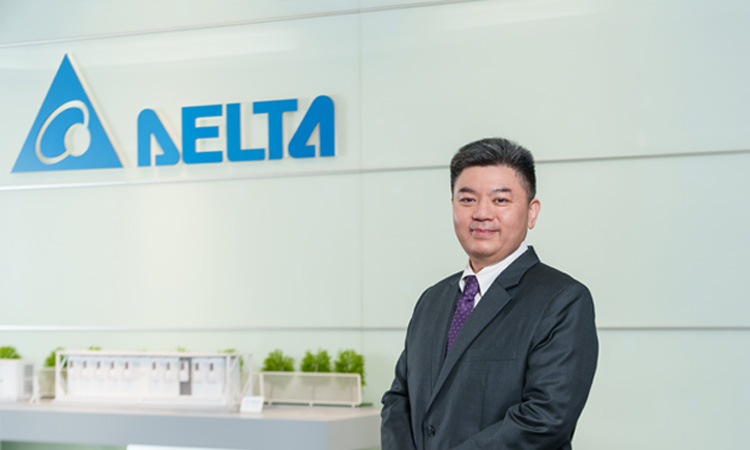
In recent years, AI has driven a profound transformation across industries worldwide, with the Americas market at the center of this wave. As competition intensifies, how Delta can strengthen its advantages while staying close to customer needs has become a critical issue. To explore this, the interview team traveled to Delta’s U.S. headquarters in Fremont, California, for an exclusive interview with Austin Tseng, President of Delta Americas. With 25 years of experience at Delta, he shares a frontline perspective on how the company is strengthening its overall solution capabilities at the intersection of the two major trends—AI and energy—and shaping itself into a key player in the AI ecosystem.
AI data centers and energy infrastructure remain the two key growth drivers
Speaking from the front line, Austin did not hesitate when asked about the most evident market opportunity today ― “AI data centers remain the primary growth driver.” He further described it as “a once-in-a-century industry transformation, and we have to seize this opportunity.” As demand for AI computing surges, data centers’ requirements for power and cooling are rising accordingly. “Customer demand is extremely strong. The real challenge is whether we can keep up with our customers.” Such pressure has also made delivery speed and overall execution capability critical competitive advantages.
Another emerging opportunity lies in energy infrastructure. As AI data centers continue to increase their demand for power, grid stress in parts of the United States is becoming more evident, driving the growing importance of microgrids and energy management systems. “We have already observed some regions experiencing power bottlenecks, so energy is an important direction for future growth,” Austin noted. He also pointed out that the energy industry is characterized by high entry barriers, long project cycles, and material responsibilities, with some systems requiring commitments of more than 20 years. In response, Delta Americas continues to integrate and strengthen its microgrid teams, bringing in experienced industry talent to respond more flexibly to local regulations and market conditions, progressively building Delta’s foundational capabilities in the energy sector.
Collaboration with the ecosystem to deepen AI data center deployment
As data center architecture becomes increasingly complex, Delta introduced its "From Grid to Chip" concept, demonstrating its ability to integrate systems from the power grid to the chip. "This is one of our key advantages," Austin said. "Not many companies can extend from the grid all the way to the chip and fully connect the entire system." He also emphasized that the role of the region is to bring these capabilities to local customers. With its headquarters in Silicon Valley and close collaboration with major cloud service providers (CSPs), the Americas region holds a key position within the AI ecosystem.
In the AI industry chain, collaboration has become essential. Speaking of key partnerships, Austin stated, "Our cooperation with NVIDIA is comprehensive. It goes beyond individual products—we aim to move toward collaboration at the overall infrastructure level." This also deepens Delta’s participation in the AI ecosystem driven by NVIDIA. To further strengthen the partnership, the Americas region has established a dedicated NVIDIA key account team to increase the depth and frequency of engagement, accelerating the advancement of the collaboration.

Austin (second from right) and Vice Chairman Mark Ko (right) attended the GTC event with the team.
Developing cross-departmental solution capabilities with collaboration at the core
To deliver a complex system deployment, cross-departmental collaboration has become critical to organizational success. As Delta continues to transform into a solution provider, the importance of such collaboration continues to grow. Each year, every region holds an annual kick-off meeting—not only to review market strategies and set annual goals, but also to foster interaction across business groups, laying the foundation for advancing the solution business.
“The Americas region is geographically extensive, with teams spread across multiple cities and sites, so opportunities to gather in person are limited,” Austin said. To strengthen team cohesion, this year’s annual kick-off meeting was held in Tucson, Arizona. Unlike previous years, outdoor offsite activities were arranged. Supported by favorable weather, managers from sales, manufacturing, R&D, and various functions engaged in in-depth discussions on market strategy and built closer relationships for future collaboration. “The primary goal of the meeting was to enhance communication and collaboration among the teams.” Many colleagues who had previously interacted only online were able to meet face to face, building deeper trust and connections. Austin also acknowledged that the event allowed him to get to know more team members and to better understand the team’s diversity and passion.
As market demand for cross-departmental integration has become increasingly clear, Austin emphasized: "The role of the region is to serve as a platform—integrating the capabilities of different business groups to respond to market changes and provide customers with complete solutions." Using data centers as an example, customers often require not only power and cooling systems, but also microgrids, energy storage systems (ESS), and broader energy infrastructure. This requires collaboration across different teams to break down the silos. Additionally, to ensure delivery speed and quality, the business side must capture requirements and closely integrate with R&D and manufacturing. "This year we specifically increased our efforts to enable faster collaboration across teams."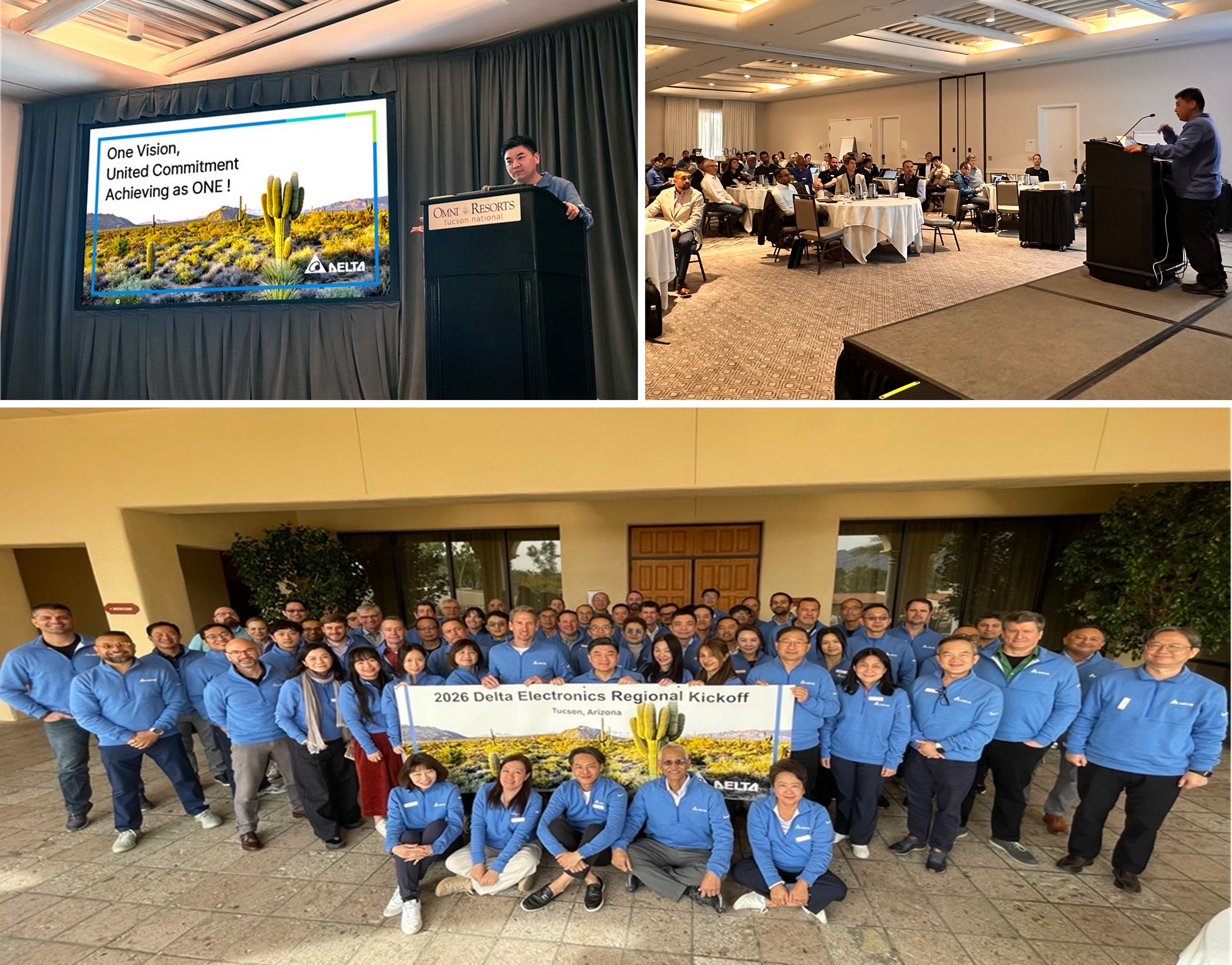
Austin gathered with managers and colleagues from various sites across the Americas at the kick-off meeting.
Expanding local R&D and manufacturing to respond quickly to local demand
Under current "Made in America" policies, new demands are emerging on the manufacturing side. Austin observed that demand for industrial automation in the U.S. continues to increase, prompting Delta Americas to shift from a component-focused approach toward solutions in this sector, strengthening its overall competitiveness in the region.
To support rapidly growing business demand in the Americas, Delta is accelerating its local R&D and manufacturing footprint expansion. On the manufacturing side, the primary site is located in Plano, Texas. In addition to existing capacity, a new plant is being planned and is expected to commence operations between 2027 and 2028. To respond promptly to data center equipment demand, Delta has also leased an additional facility and plans to begin producing large cabinets and system-level products in the second half of 2026.
On the R&D side, Delta has long maintained a center in Raleigh, North Carolina, serving as a key base for advanced technology development. Its scope continues to expand from low-voltage to medium-voltage applications. Recognizing that the United States is one of the world's largest energy markets, Delta has recently further expanded its R&D efforts related to energy infrastructure, strengthening its understanding of local grid regulations and technical standards. "Many systems have to comply with local regulations, so we are building local teams to strengthen our capabilities in this area," Austin said. Additionally, a microgrid demo site has been established in Detroit, Michigan, with plans to expand laboratory facilities in Plano and at its headquarters in Fremont. Austin explained that by locating facilities across different sites, Delta aims to stay closer to customers and enhance its local service capabilities.
From products to solutions: shaping the “One Delta” culture
Shifts in industry demand have also driven internal organizational changes. In the past, the Americas region focused primarily on ODM products. As demand for solutions increases, cross-departmental collaboration becomes indispensable. “When doing solution business, it’s not just about products—it also includes services, integration, and long-term project management,” Austin said. Under this shift, "One Delta" is no longer just a slogan, but a guiding principle in daily operations. It also challenges existing processes and internal collaboration models. The region’s role is evolving from simply promoting business to serving as an important platform for integrating resources and building local capabilities.
Drawing on 25 years of experience, Austin noted that after moving from business groups to the Americas region, he came to appreciate how product lines had previously been relatively straightforward. Under a portfolio-sales and solutions-oriented approach, the region needs to recruit experienced industry talent to help teams build industry expertise, as well as establishing local service capabilities so that the team can become proficient in steadily expanding business, operations, and partnerships in the technology-leading Americas market.
As transformation progresses, the importance of brand communication continues to grow. Last year, the Americas region strengthened the composition and functions of its marketing team, expanded external communication efforts to ensure that Delta's collaborative value within the ecosystem would be understood and recognized by more potential customers. The Americas marketing team aims to help the market better understand Delta’s brand positioning of "more than power electronics" and, by sharing successful cases, its capability to deliver comprehensive solutions. "We used to be less proactive in external publicity because our customer base was very stable," Austin said. "But as the industry evolves, we need to let more people know what Delta is doing and what we can do."
Leveraging 25 years of perspective to co-create the future of the Americas region
Looking back on his 25 years at Delta, Austin began his career in telecom power sales and later gained experience across fields including electric vehicles and networking systems. "Having come this far, many of the things that were very difficult at the time actually proved to be helpful in hindsight." This cross-domain experience enabled him to lead the Americas team with a broader perspective in navigating the complex solutions market.
When sharing these experiences, Austin also expressed heartfelt gratitude to the company and his supervisors for providing the platform, to his family for their support, and to the global colleagues with whom he had formed deep bonds. He said he hopes that, during his time in the Americas region, he and the team can work together to accomplish their objectives and build a stronger presence for Delta in the Americas region. Amid the powerful waves of AI and energy, Austin brings this accumulated experience and perspective to lead the team forward steadily, continuing to expand Delta’s long-term presence in the Americas.
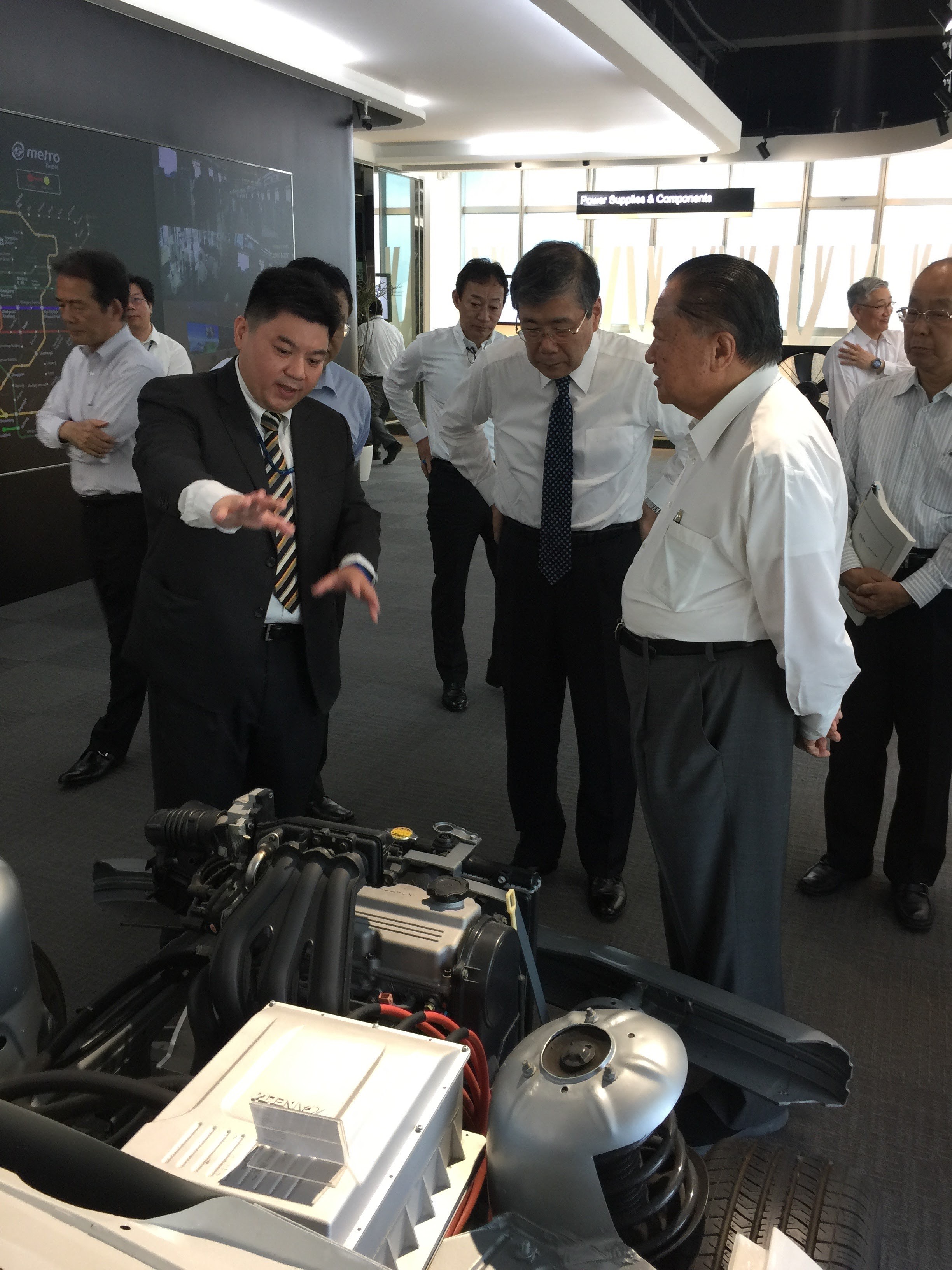
Austin has accumulated extensive cross-departmental experience at Delta.
Photo of him presenting a core product to Delta’s founder, Bruce Cheng, in the EV division in the early 2010s.