

2026/10
2026/02
Text by Global Philanthropic Affairs Department
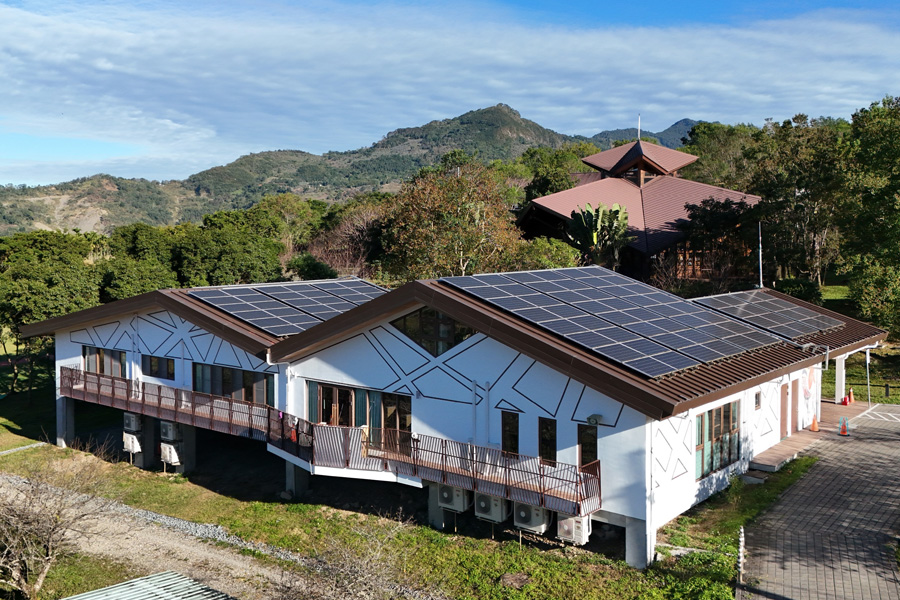
The Namasia Mincyuan Elementary School Affiliated Kindergarten, donated and constructed by the Delta Electronics Foundation, has been awarded the Levels 1+ Low-Carbon Building Label by Taiwan’s Ministry of the Interior. This certificate represents the highest rating under the Low Embodied-carbon Building Rating System (LEBR) established by the Architecture and Building Research Institute (ABRI), specifically within its assessment framework for low-carbon and circular construction materials. Located in the mountainous region of Kaohsiung, the Namasia Kindergarten has become the first educational facility in Taiwan to receive this ultra-low embodied carbon building certificate.
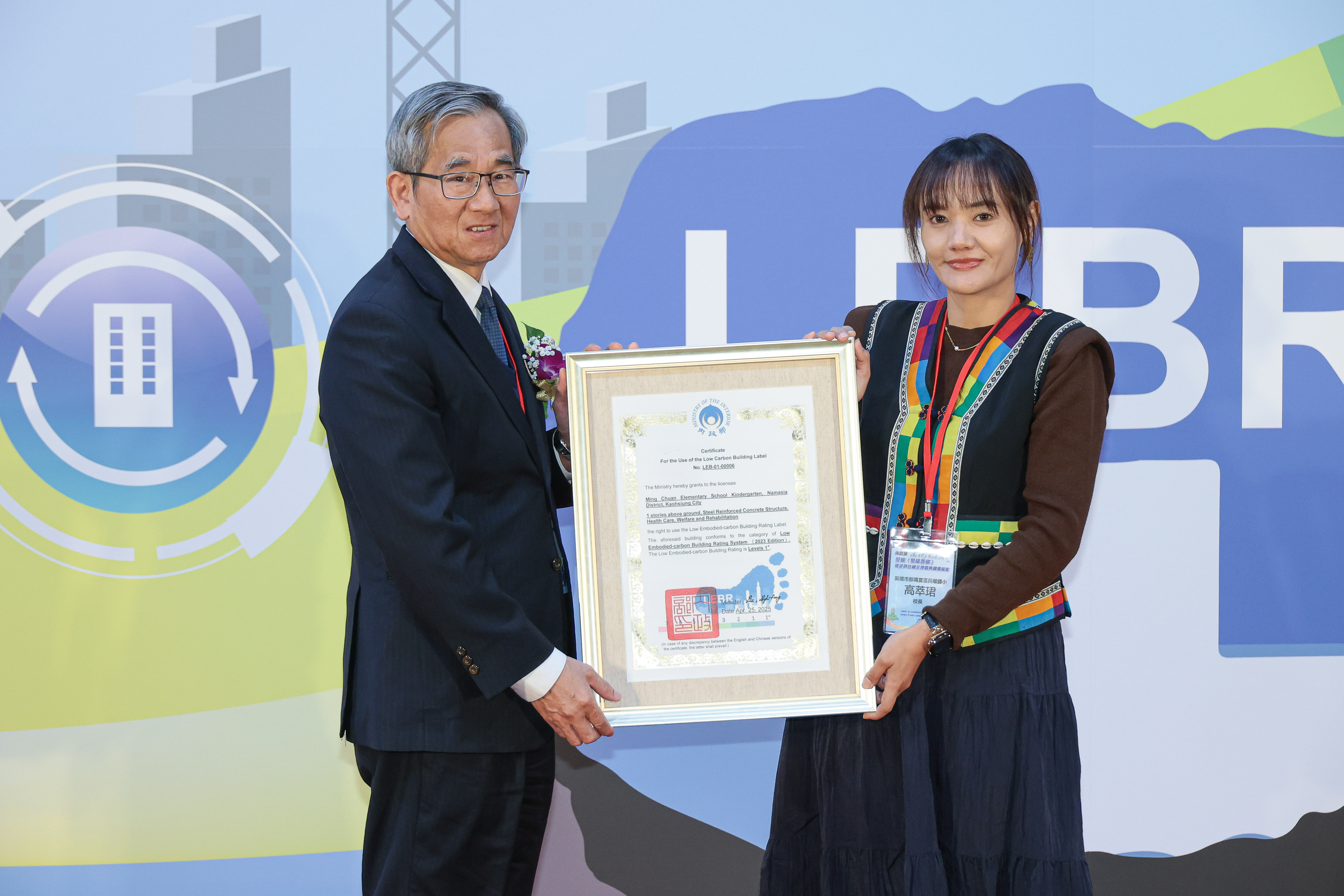
Namasia Mincyuan Kindergarten was awarded the Ministry of the Interior’s Levels 1+ Low-Carbon Building Label Certificate.
From the initial planning stage, the project built upon the Delta Foundation’s post-Typhoon Morakot successful reconstruction experience at Mincyuan Elementary School. Beyond integrating passive design strategies adapted to the mountain climate and incorporating Indigenous architectural wisdom, the project prioritized carbon reduction throughout the building lifecycle.
Structurally, the building adopts a compact massing and optimized structural spans, effectively reducing the use of reinforced concrete. The application of high-performance low-carbon concrete further improves material efficiency and lowers carbon emissions in the primary structure. In terms of materials, lightweight grouted wall systems replace conventional masonry partitions, while outdoor areas extensively utilize gravel surfaces and permeable pavements instead of high-carbon cement and ceramic tiles. This method substantially reduces the building’s embodied carbon footprint.
According to the assessment, the building’s total carbon emissions amount to 273,139 kgCO₂e, representing a reduction of 172,239 kgCO₂e compared to the baseline, with an overall carbon reduction rate of 38.67%. As a result, the project was awarded the Levels 1+ Low Embodied-carbon Building Label. Beyond serving as an energy-efficient, low-carbon learning green environment, the kindergarten offers the best immersive setting that integrates environmental sustainability into early childhood education, fostering climate resilience within the Indigenous community from the ground up.
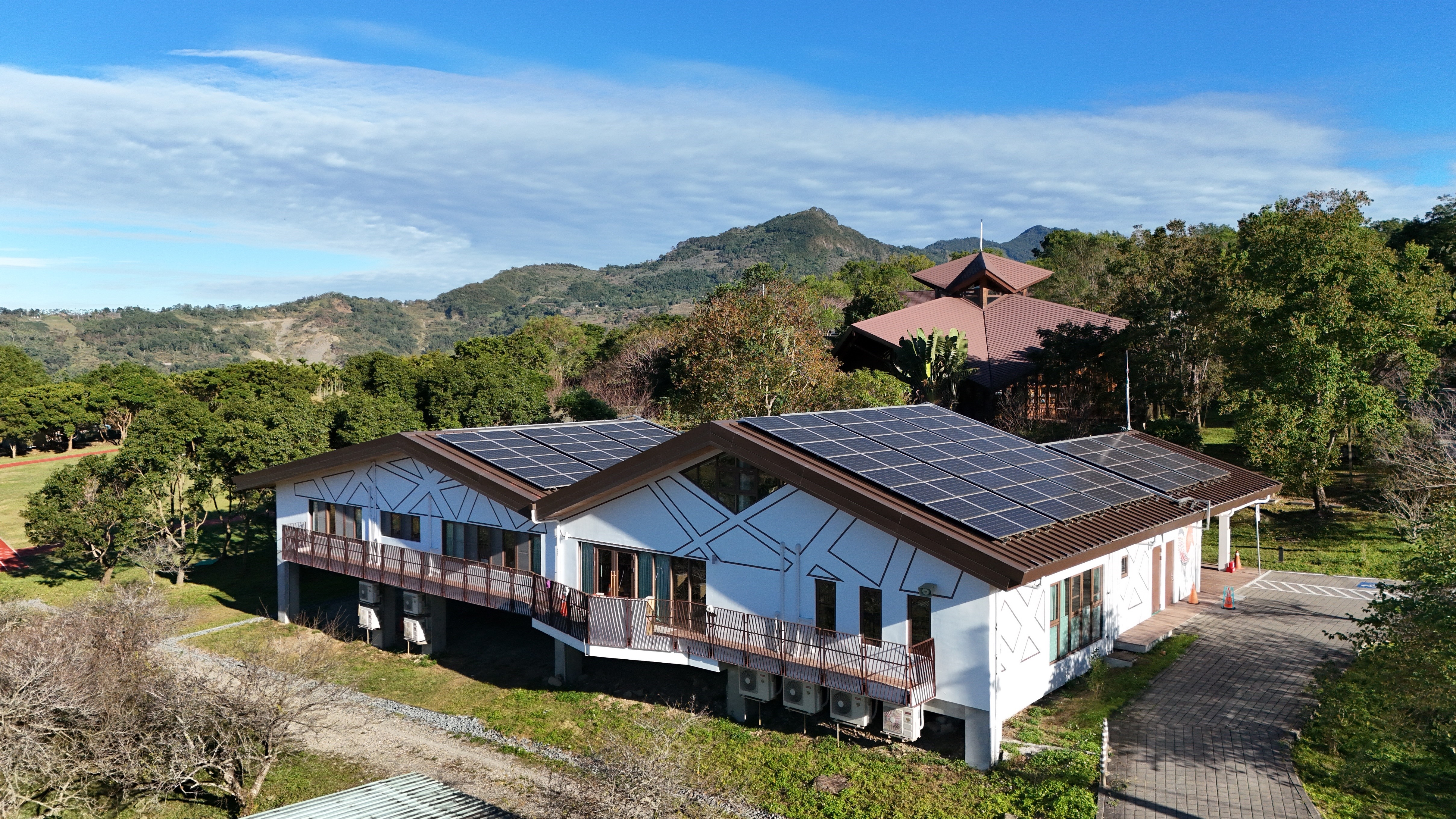
The Namasia Kindergarten utilizes compact massing and optimized structural spans to minimize the use of reinforced concrete, effectively reducing the building's embodied carbon.
Beyond its architecture, the kindergarten serves as a living laboratory for Indigenous students to learn about climate adaptation and environmental stewardship. Every year before Christmas, Delta volunteers travel to Namasia to celebrate with the students and ensure the campus facilities remain in peak condition. This includes cleaning and maintaining the solar panels to guarantee a stable supply of renewable energy, which further strengthens the community’s disaster resilience.
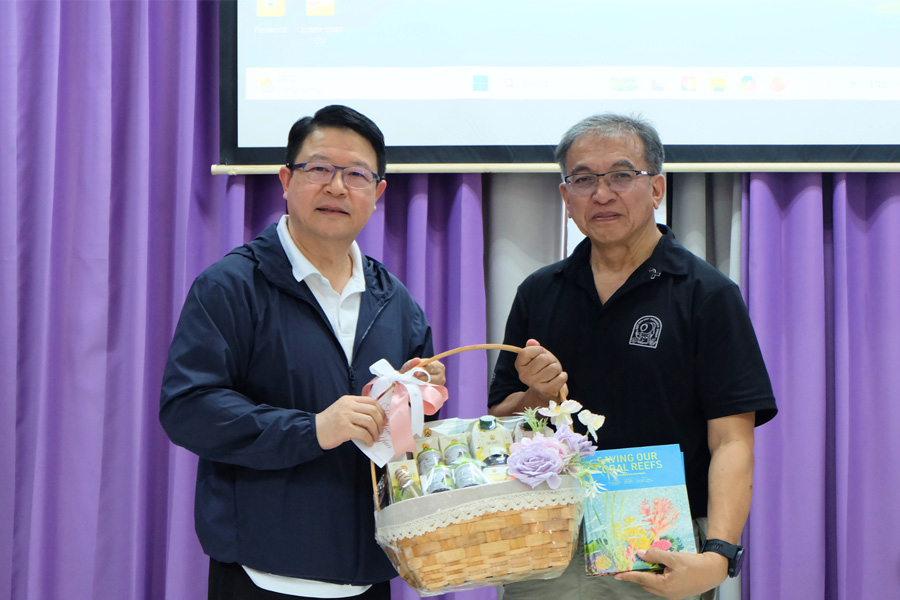
In 2025, volunteers introduced a new biodiversity curriculum featuring Delta’s self-produced picture book, Coral: The Forest of the Sea. The program guided students from the mountains to understand the importance of marine conservation, broadening their environmental horizons.
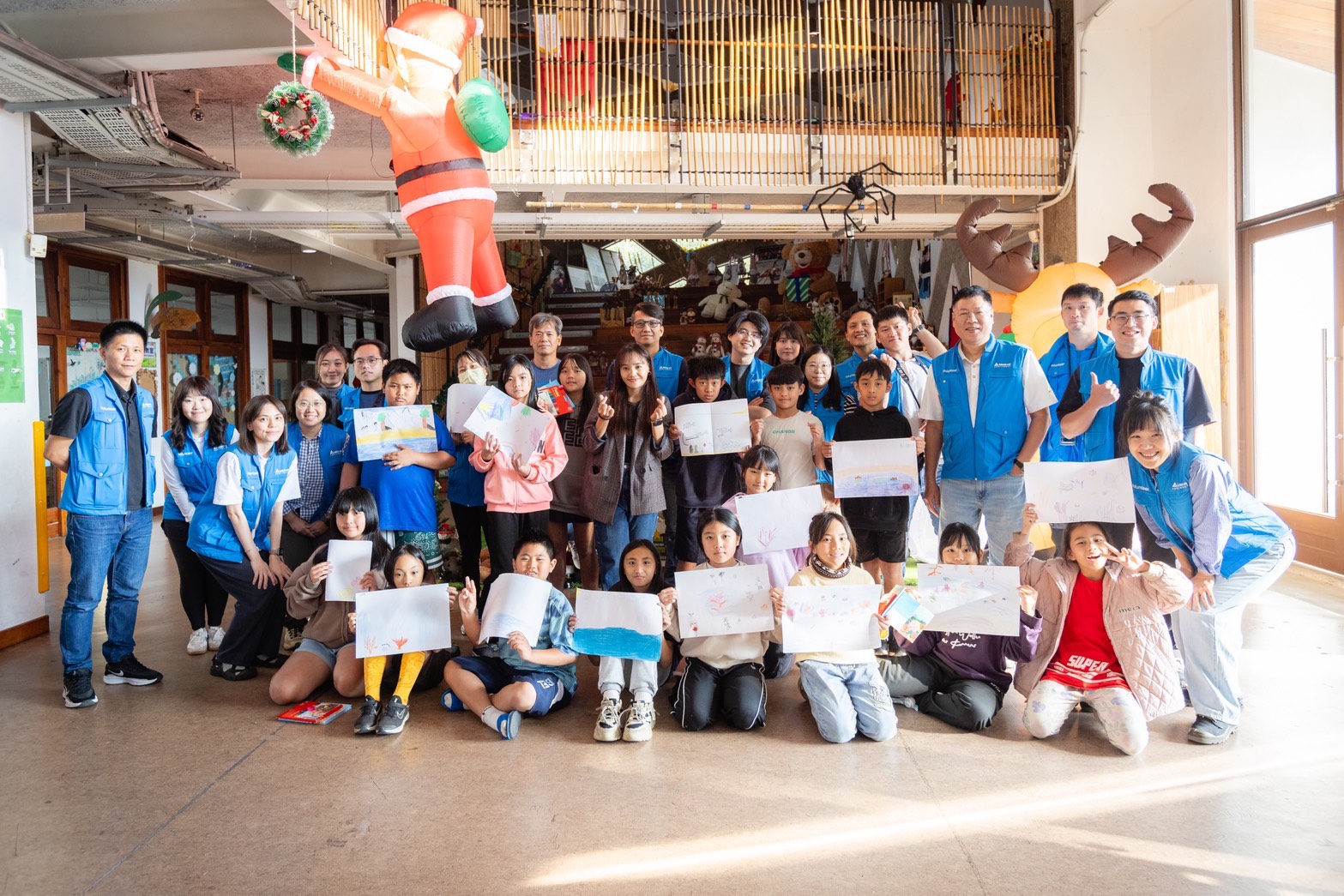
Principal Savi Takiludun (center) with the Delta Foundation volunteer team and students during the annual campus visit.
From the reconstruction of low-carbon school buildings to a decade of continuous volunteer support, Delta’s involvement in Namasia transcends disaster relief—it is a shared journey toward sustainability with the local community. When low-carbon buildings become classrooms and nature becomes the curriculum, sustainability is no longer an abstract concept; it becomes a visible, tangible part of the children’s everyday lives.
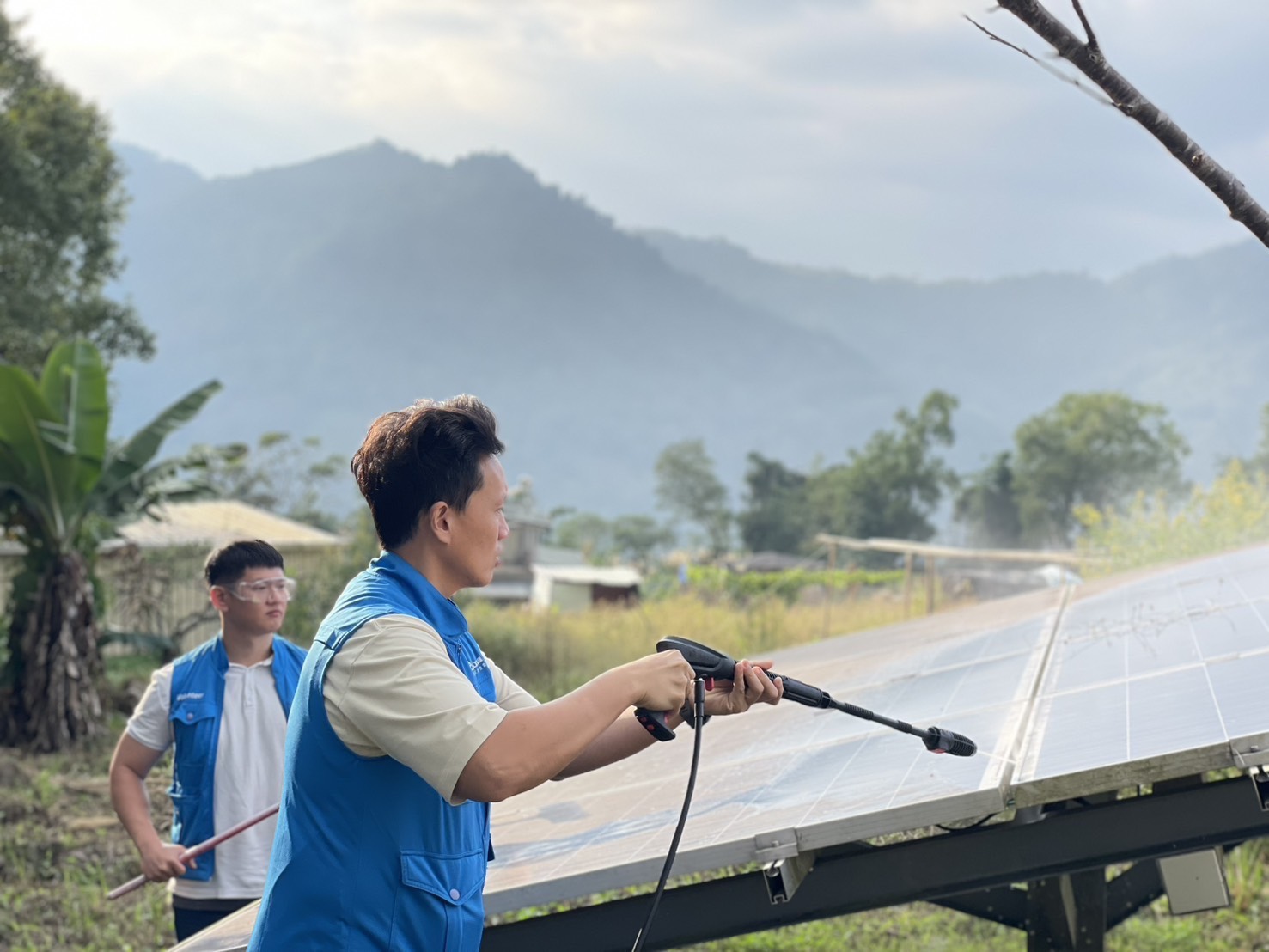
Delta Foundation volunteers assist in cleaning and maintaining solar panels to ensure stable renewable energy generation.
2026/10

2026/08
2026/06
2026/04