


2026/10
2025/12
Text by Wei-Han Lin (Writer of Low-Carbon Life Blog, Delta Electronics Foundation)
In July this year, southern Taiwan was hit hard by heavy rainfall, damaging not only numerous homes but also several historic sites. At Tainan's nationally designated heritage site, Nankunshen Daitian Temple, decorative clay tiles fell and the paifang collapsed; Chiayi Old Prison suffered damage; and Penghu's Mazu Temple experienced severe indoor water leakage. These incidents have brought the challenges of preserving historic sites under extreme weather into sharp focus. The threat extends beyond Taiwan, as many World Heritage Sites worldwide face risks of damage or even disappearance due to climate change.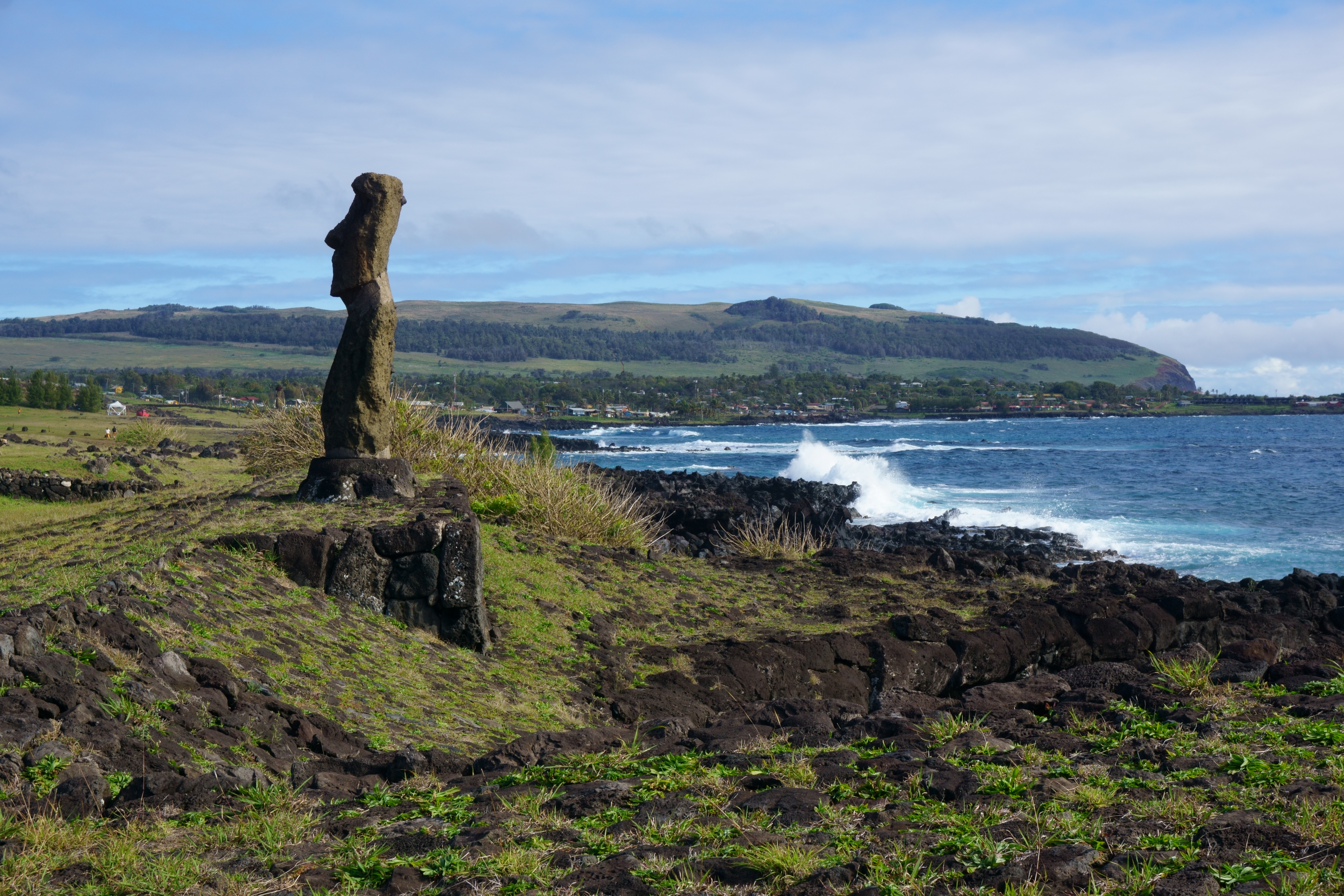 Picture of Easter Island. Image source: kallerna. (CC BY-SA 4.0)
Easter Island Moai Statues: the clash between traditional culture and heritage preservation
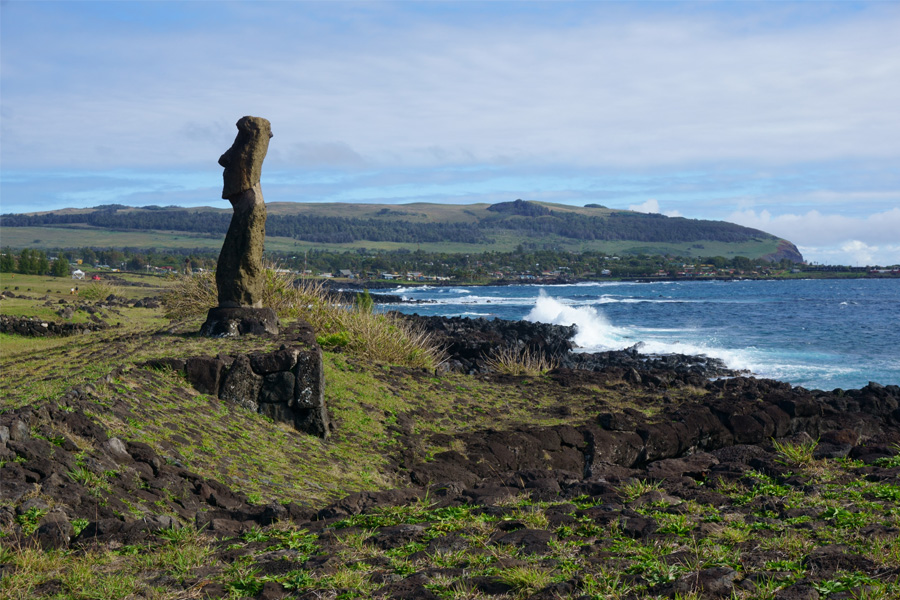
On Chile's Easter Island, the isolated World Heritage site Rapa Nui National Park is home to over 900 towering Moai statues, which serve as important cultural symbols for the local community. Concentrated along the coastline, these statues face emerging threats from climate change, making them increasingly vulnerable to rising sea levels, storm surges, and even tsunamis.
A new study published in the Journal of Cultural Heritage indicates that by as early as 2080, ocean waves could reach the island's largest ceremonial platform, Ahu Tongariki. This site features the most famous group of Moai statues—15 figures aligned facing inland—and attracts tens of thousands of visitors each year, forming the backbone of the island's tourism economy.
Local officials have attempted to prevent coastal erosion by constructing seawalls, with the first experimental seawall built at Ahu Runga Va'e. However, it remains uncertain whether this will be sufficient to halt erosion. Some suggest anchoring the Moai onto more stable rock foundations or even relocating them to museums. Others remain confident that, much like their ancestors who survived past collapses, the island's residents will find a way to adapt to the challenges posed by rising sea levels.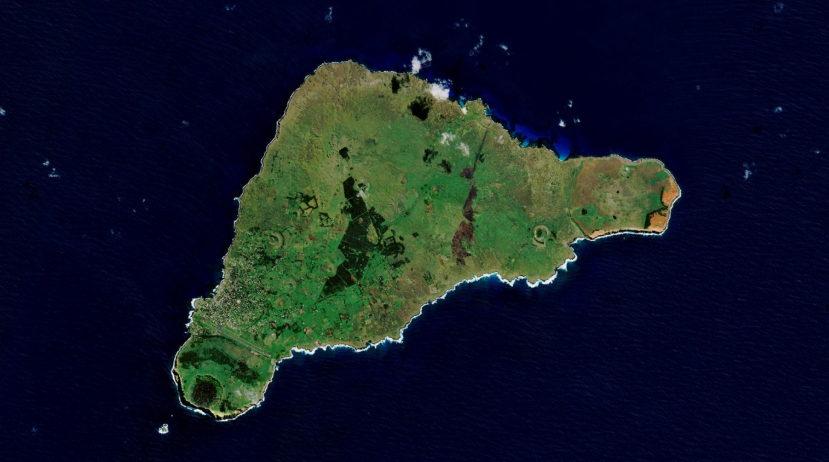 Satellite view of Easter Island, taken in 2019. Image source: European Space Agency (CC BY-SA 3.0 IGO)
Kilwa Kisiwani: local forces protecting heritage sites
Located on a small island off the coast of Tanzania in the Indian Ocean, Kilwa Kisiwani is a World Cultural Heritage site. Known in Swahili as a historic trading city, this millennium-old city bears witness to the glory of East African Swahili civilization. Due to coastal erosion and lack of maintenance, it was listed as a World Heritage in Danger in 2004. At that time, Kilwa Kisiwani faced a severe preservation crisis: rising sea levels and relentless waves threatened the coral-stone structures, causing wall collapses and foundation losses at key sites such as the Great Mosque and Husuni Kubwa Palace. Combined with vegetation damage and the absence of systematic management, this invaluable cultural heritage site was on the brink of destruction.
In response to the crisis, the Tanzanian government partnered with international organizations to launch a decade-long rescue initiative. Measures included constructing seawalls to block wave erosion and planting mangroves on a large scale to form natural barriers. Crucially, the local community was placed at the heart of preservation efforts. Residents received professional training to become restoration artisans, tour guides, and site monitors, using traditional coral-stone materials and techniques to repair historic structures. A heritage committee was also established, allowing the community to participate directly in management and decision-making.
In addition, through the development of community tourism, handicraft cooperatives, and community museums, conservation efforts have not only created employment opportunities but also inspired a sense of pride and responsibility among residents toward their cultural heritage. Thanks to the joint efforts of the community, government, and international organizations, the preservation status of Kilwa Kisiwani has significantly improved, and in 2014, it was successfully removed from the list of World Heritage in Danger, becoming a model for cultural heritage conservation.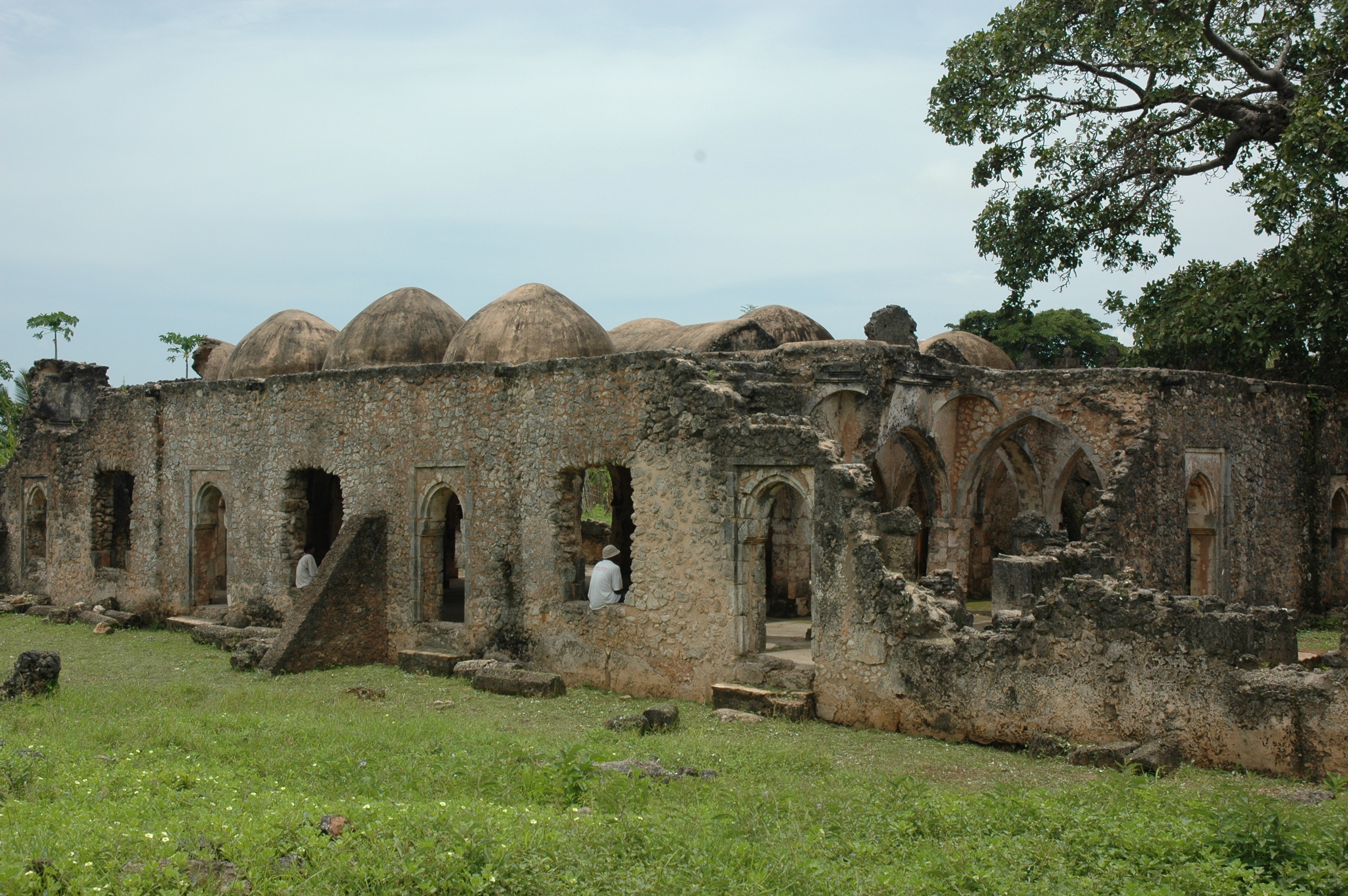 The“Kilwa Kisiwani”in East Africa, once listed as an endangered World Heritage Site. Photo by Ron Van Oers; image source: UNESCO. (CC BY-SA 3.0 IGO)
Venice: can technology safeguard the ancient city?
The thousand-year-old city on water, Venice, home to precious historic landmarks such as St. Mark's Basilica and the Doge's Palace, is a UNESCO World Cultural Heritage site that attracts millions of visitors each year. However, this ancient city is now under threat from rising sea levels and increasingly frequent floods.
To combat the increasingly severe acqua alta, the Italian government invested nearly 6 billion Euros in constructing the MOSE flood protection system, named after the biblical story of Moses parting the Red Sea. This high-tech engineering project consists of 78 massive mobile gates that can rise within 30 minutes to block incoming seawater, effectively shielding Venice from flooding. Since its launch in 2020, the system has played a crucial role on multiple occasions.
Although the MOSE system has proven effective in preventing floods, it has also given rise to a number of unforeseen challenges. The frequent closure of the gates disrupts the natural water exchange between the lagoon and the open sea, leading to reduced sedimentation in salt marshes and accelerated erosion. Pollutants trapped inside the lagoon become difficult to dilute or discharge, resulting in deteriorating water quality and even potential hypoxic events that threaten aquatic life. In addition, the enormous construction and maintenance costs, corruption scandals during the project, and the impact on port navigation have all become heavy burdens. More worryingly, as sea levels continue to rise, the gates will need to be closed more frequently, potentially turning the lagoon into a stagnant body of water cut off from the sea. While Venice may be spared from flooding, it risks losing the very lagoon ecosystem on which its existence depends. Caught between high-tech protection and ecological balance, the ancient city's sustainable future remains under serious threat.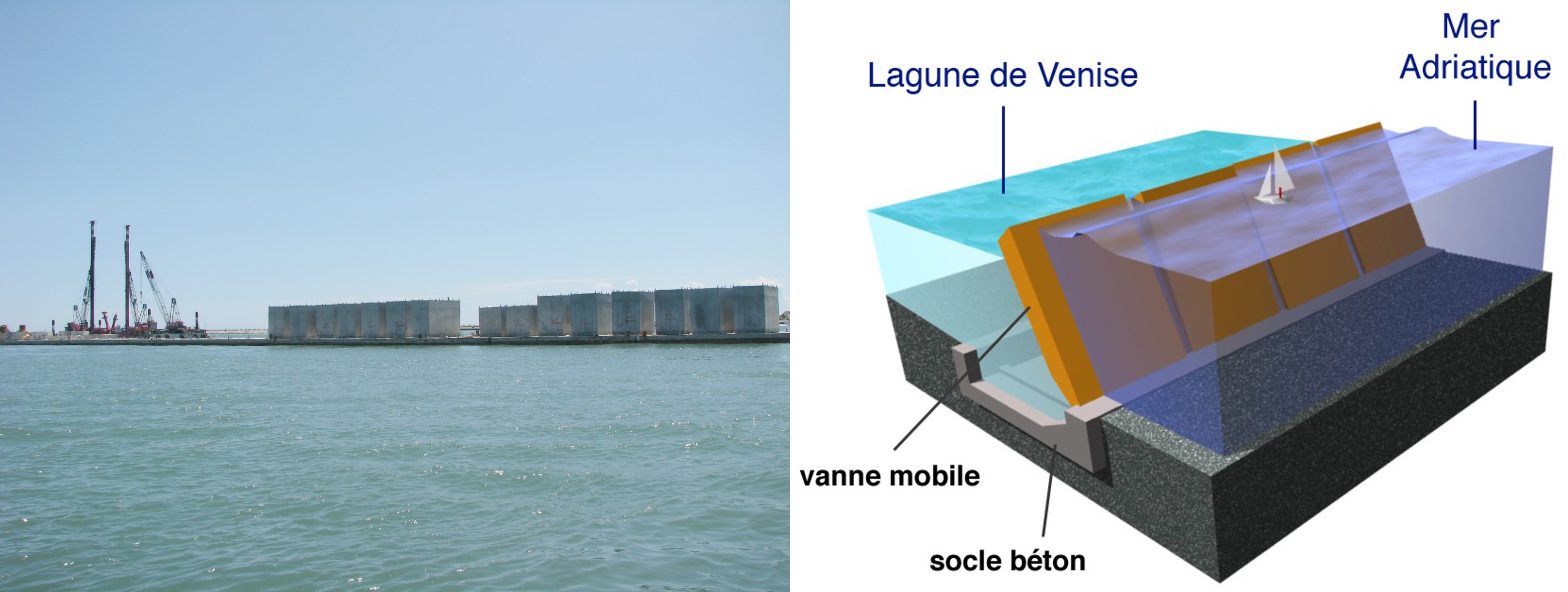 (Left) The“MOSE Project”in Venice. Image source: Chris 73. (CC BY-SA 3.0)|(Right) The “MOSE Project” in Venice. Image source: Irønie (CC BY-SA 3.0)
These cases reveal the shared challenges and diverse responses of World Heritage sites in the face of climate change. Venice's reliance on a single technological solution has proven effective, yet it risks causing irreversible ecological damage. The stone statues of Easter Island prompt reflection on the religious and cultural meanings embedded within heritage sites, while Kilwa Kisiwani demonstrates the power of local community participation. Together, these experiences offer valuable lessons for Taiwan to learn from and reflect upon—on how to safeguard the historical footprints of this island when confronting the climate crises of the future.
References:
White MAD, MOSE: the technological marvel to save Venice
Bloomberg (March 11, 2022), Easter Island at Risk From Rising Seas, Extreme Weather
Al Jazeera (August 13, 2025), Rising seas could put Easter Island's iconic statues at risk by 2080: Study
The New York Times (March 15, 2018), Easter Island Is Eroding - The New York Times
Google Arts & Culture, A Quick Guide to Kilwa Kisiwani's Climate Crisis
This article is reprinted from the Low-Carbon Life Blog, jointly planned by the Delta Electronics Foundation and the Taiwan Environmental Information Association.
2026/10

2026/08

2026/06

2026/04