
India's metro rail network is growing fast. More than 20 cities are either running or building metro systems, and that number continues to rise. As these networks expand, keeping the power supply stable and uninterrupted has become one of the most important challenges for operators. This is especially true for underground metro lines, where a sudden power failure is far more difficult to manage than on an elevated or surface-level route — and where passenger safety is directly at stake.
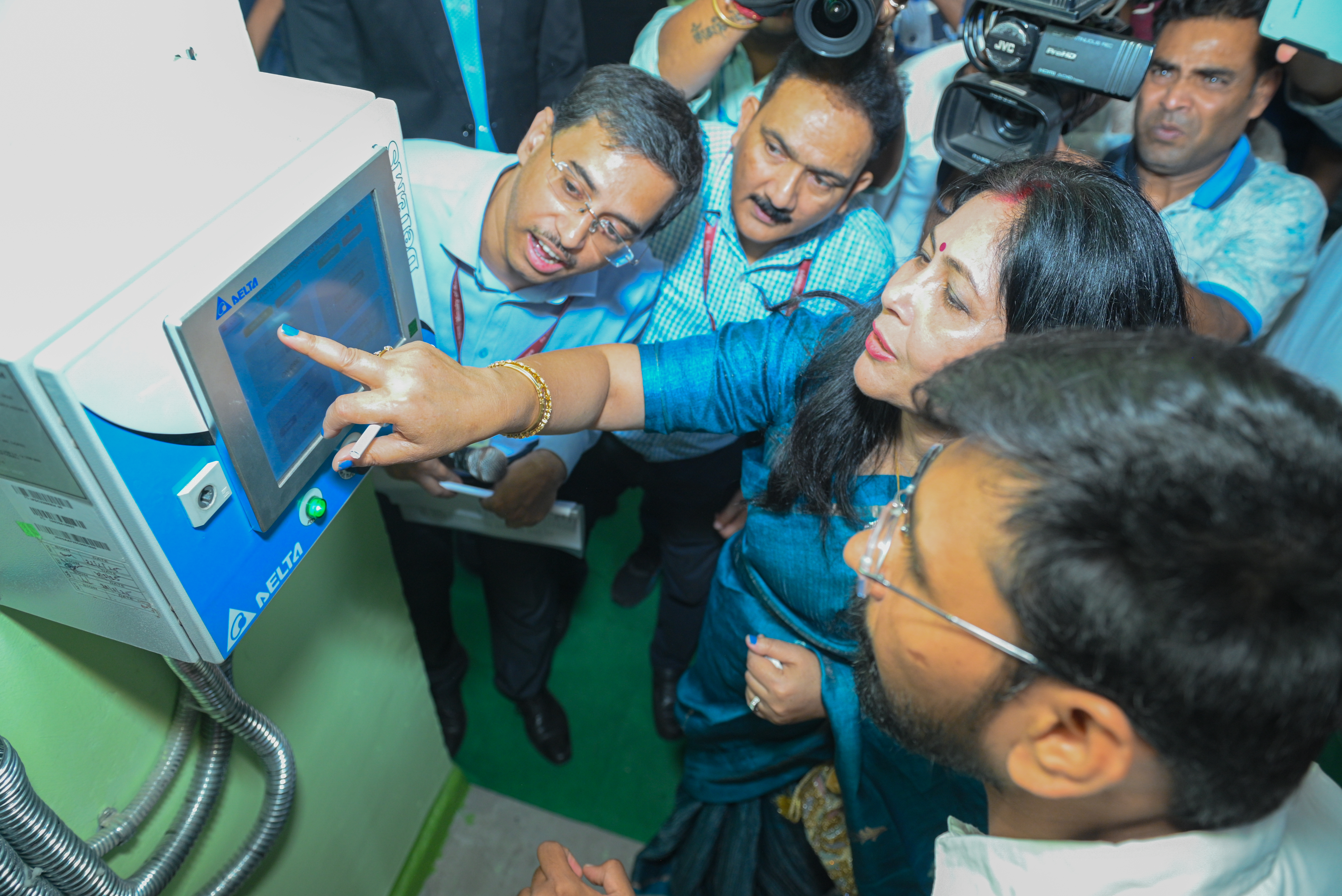
System demonstration by Delta Electronics India team to officials of Metro Railway Kolkata
Battery Energy Storage Systems have emerged as one of the more practical solutions to this problem. Originally associated with renewable energy projects, these systems are now finding a natural home in urban transit infrastructure, where fast power response and supply backup can make a real difference to both operations and passenger safety.
Against this backdrop, Kolkata Metro took a significant step forward in February 2026, when it inaugurated a 6.4 MWh/4 MW Battery Energy Storage System at the Central Sub-station of its Blue Line. Implemented by Delta Electronics India, the deployment makes Kolkata Metro the first underground metro railway in India to install a large-scale battery storage system.
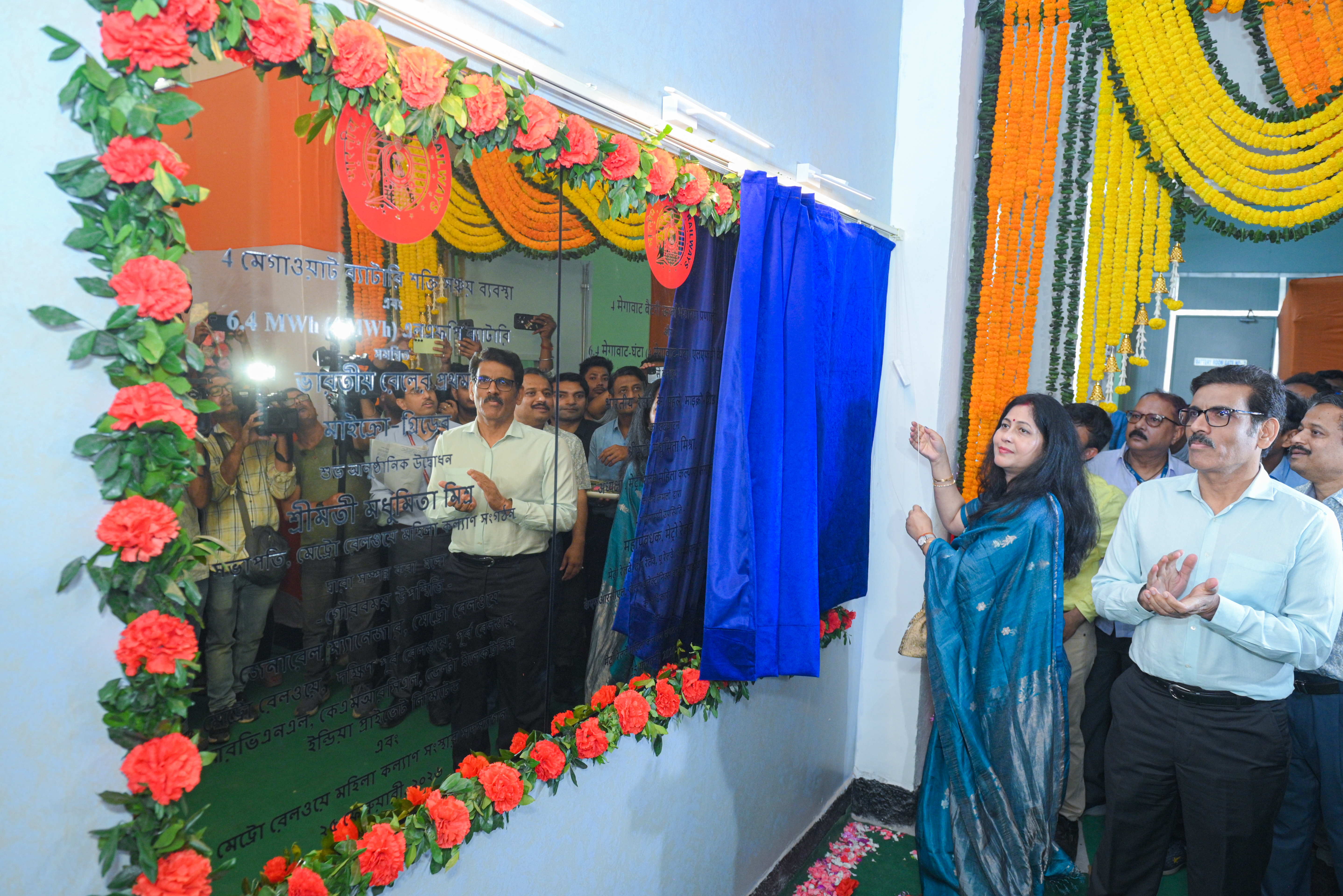
Foundation stone inauguration by Madhumita Mishra, President, Metro Railway Women’s Welfare Organisation, and Subhransu Sekhar Mishra, General Manager, Metro Railway Kolkata
The core purpose of the system is straightforward. If the power grid fails or is interrupted, the BESS kicks in immediately, giving trains enough power to reach the nearest station safely rather than stopping in the middle of a tunnel. On a normal day, the system also helps manage peak power demand and improve energy efficiency at the sub-station, reducing unnecessary load on the grid. The technology at the heart of the system is Lithium Iron Phosphate batteries, paired with high-efficiency power electronics. What sets this deployment apart is that the entire solution — including the Power Conversion System, Energy Management System, and Battery Racks — was built in-house by Delta Electronics India. Designing and manufacturing all the key components under one roof means the system is more tightly integrated, easier to maintain over time, and better suited for the long-term demands of a busy metro network.
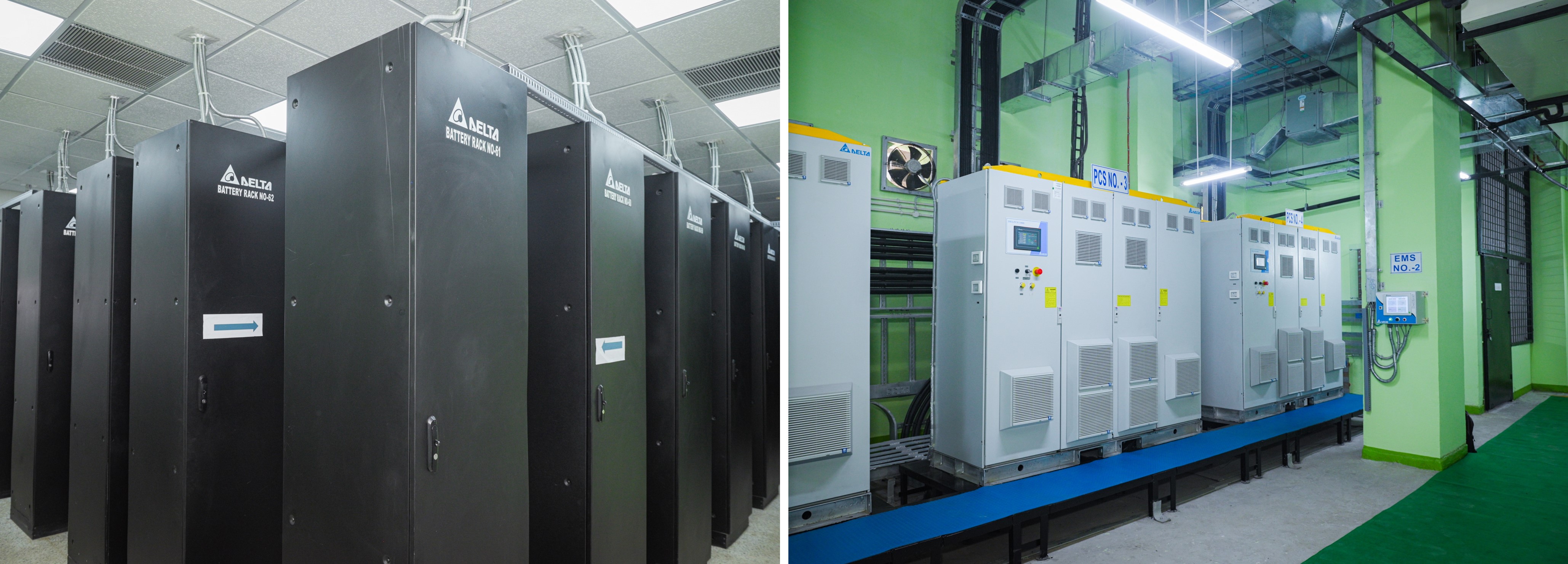
Left: Battery racks enabling energy storage and dispatch within the BESS supporting metro operations
Right: PCS unit forming the core of the BESS, supporting stable power supply and efficient grid integration for Metro Railway Kolkata
The project also fits into a larger national push. It is aligned with the Union Cabinet-approved National Programme on Advanced Chemistry Cell Battery Storage, which is aimed at building India's domestic energy storage capacity and supporting cleaner, more reliable public transport across the country. What makes this deployment worth paying attention to is not just the technology itself, but what it signals for the sector. As more Indian cities build underground metro lines, the need for dependable, storage-backed power infrastructure will only grow. Kolkata Metro's experience provides a working example for other metro systems across the country — showing that large-scale battery storage is not a distant possibility, but a practical and necessary investment for modern urban transit.
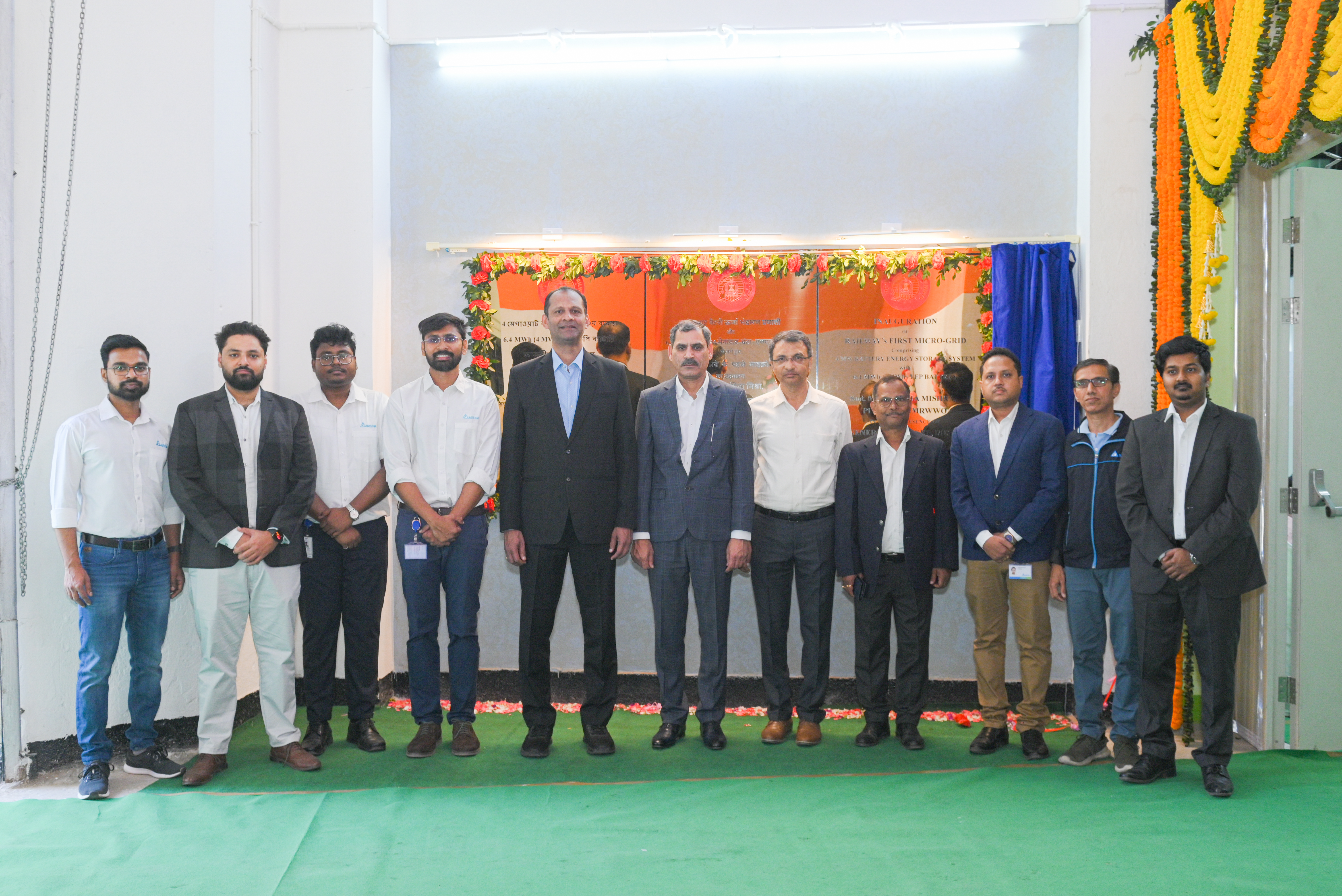
Team Delta Electronics India after the inauguration of the BESS project for Metro Railway Kolkata


