
In the semiconductor industry's pursuit of high-speed, precision manufacturing, equipment R&D must not only be fast but also accurate. Traditional development, however, relies heavily on extensive prototyping and adjustments, which are costly and can slow down project timelines. Delta recognizes this challenge and has introduced the DIATwin Virtual Machine Development Platform, which enables validation of physical equipment in a virtual environment—ushering in a new R&D model for the semiconductor equipment sector.
Founded in 1996 and headquartered in the Kaohsiung Science Park, Allring Tech has been dedicated to developing semiconductor and automation process equipment. Allring's multi-head dispensing equipment faced high risks and costs during both R&D and operations. For example, during development, software programs could only be tested directly on real machines. During maintenance, failures required on-site troubleshooting, which was time-consuming and difficult to replicate.
After adopting Delta's DIATwin, these issues were resolved. DIATwin enabled validation of equipment and programs in a virtual environment, reducing trial-and-error. Furthermore, during operations, engineers could remotely reproduce issues and test solutions, minimizing downtime risks. With a low learning curve, Allring's engineers needed only 8 hours to build an externally controlled virtual equipment model, enabling rapid production-level simulations and enhancing commissioning, line changeovers, and digital R&D processes. At SEMICON Taiwan 2025, Allring showcased the integrated solution for its multi-head dispensing equipment as a milestone of its collaboration with Delta.
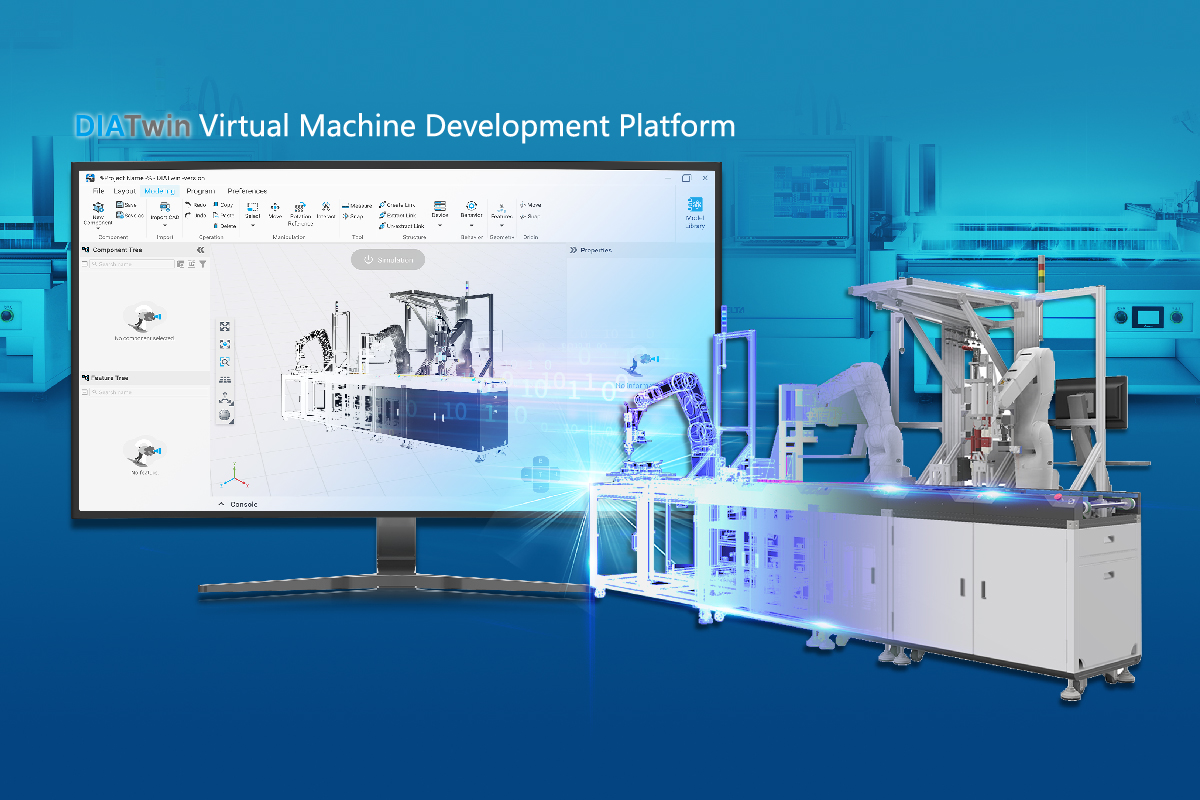 DIATwin validates machine programs virtually in advance to reduce Allring Tech's trial-and-error costs. During operation, engineers can remotely reproduce issues and test solutions, minimizing downtime risks.
Delta's Digital Twin Solution offers the following benefits:
1. Reduces R&D Trial-and-Error Costs: The DIATwin Virtual Machine Development Platform reduces development costs and modifications with virtual simulation prior to physical prototyping, shortening development cycles and lowering R&D expenses.
2. Accelerates Equipment Deployment and Adjustment: Complete program validation virtually before physical implementation. Once deployed, systems can go online faster, with remote operation enabling real-time corrections for enhanced efficiency and precision.
3. Establishes a Long-Term Digital R&D Framework: Using the multi-head dispensing equipment as a case study, Allring began incorporating digital twin technology into its equipment development SOP—building a sustainable, replicable R&D model.
The collaboration between Delta and Allring not only highlights the value of digital twins but also signals the beginning of a new chapter in smart manufacturing. From optical coupling equipment to multi-head dispensing machines, the DIATwin platform empowers the industry to accelerate innovation and smart upgrades with higher efficiency.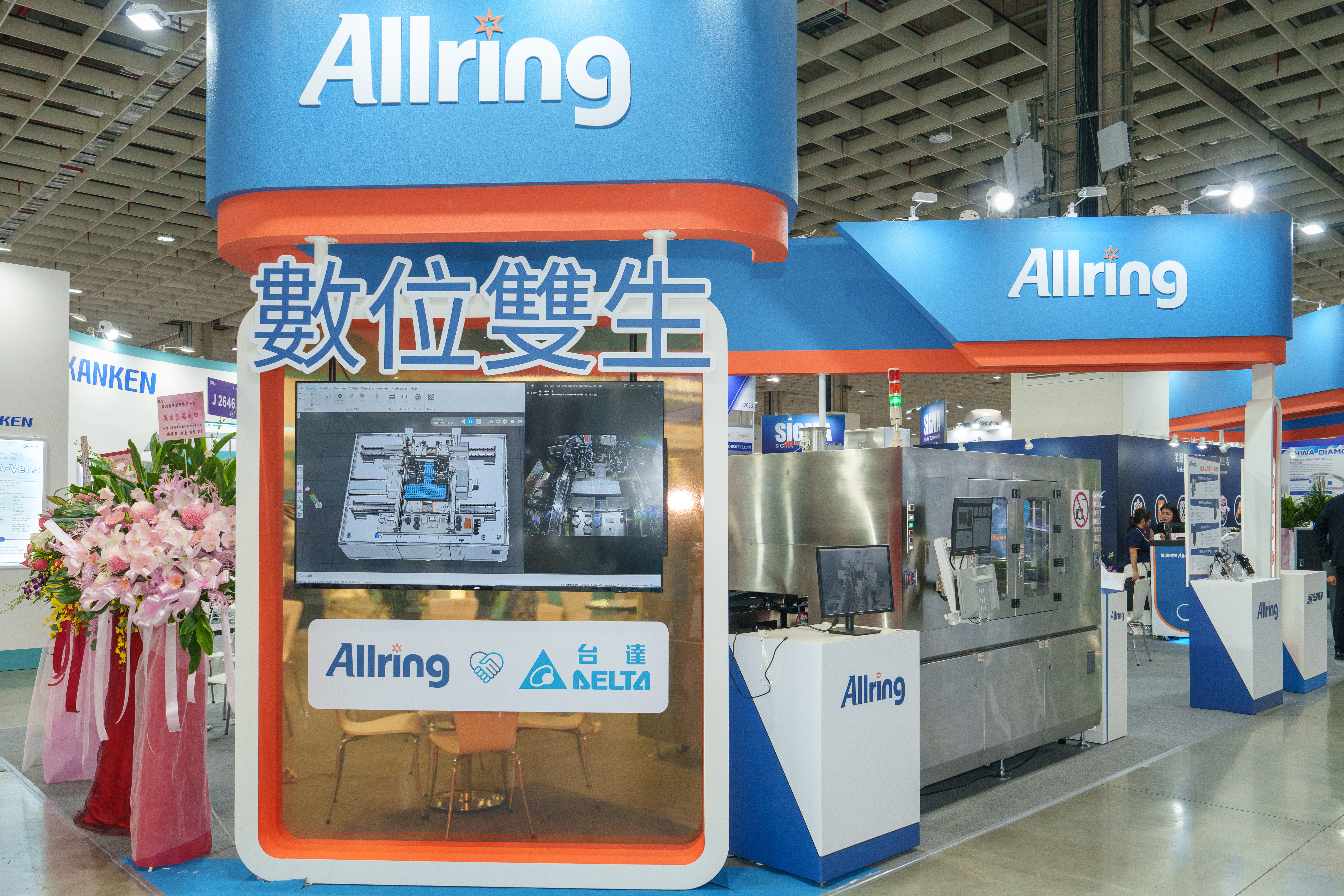 Allring showcased its cyber-physical integration application of the multi-head dispensing equipment at SEMICON Taiwan 2025, which leverages Delta Virtual Machine Development Platform DIATwin to enhance development efficiency.


