
Delta's long-standing connection with Dr. Amory Lovins, co-founder of the Rocky Mountain Institute, began several decades ago when Founder Mr. Bruce Cheng and CEO Mr. Ping Cheng were deeply inspired by his influential book Natural Capitalism. Its vision of leveraging innovative technology and high-efficiency management to optimize natural capital and drive sustainable development became an enduring influence on Delta's corporate philosophy. This meaningful connection was renewed on October 1 at Stanford University, marking a new chapter of in-depth collaboration between Delta and the academic community.
Mr. Yancey Hai, former Chairman of Delta, represented the company at the Big Ideas Forum: Where Sustainability, Efficiency, and Profitability Interact, where he joined Dr. Lovins and Professor Will Chueh from Stanford University. In his address, Mr. Hai shared Delta's journey in advancing energy efficiency and sustainability, highlighting how visionary leadership and disciplined governance have shaped Delta's global sustainability impact. His continued contributions to advancing Delta's mission are deeply appreciated and respected.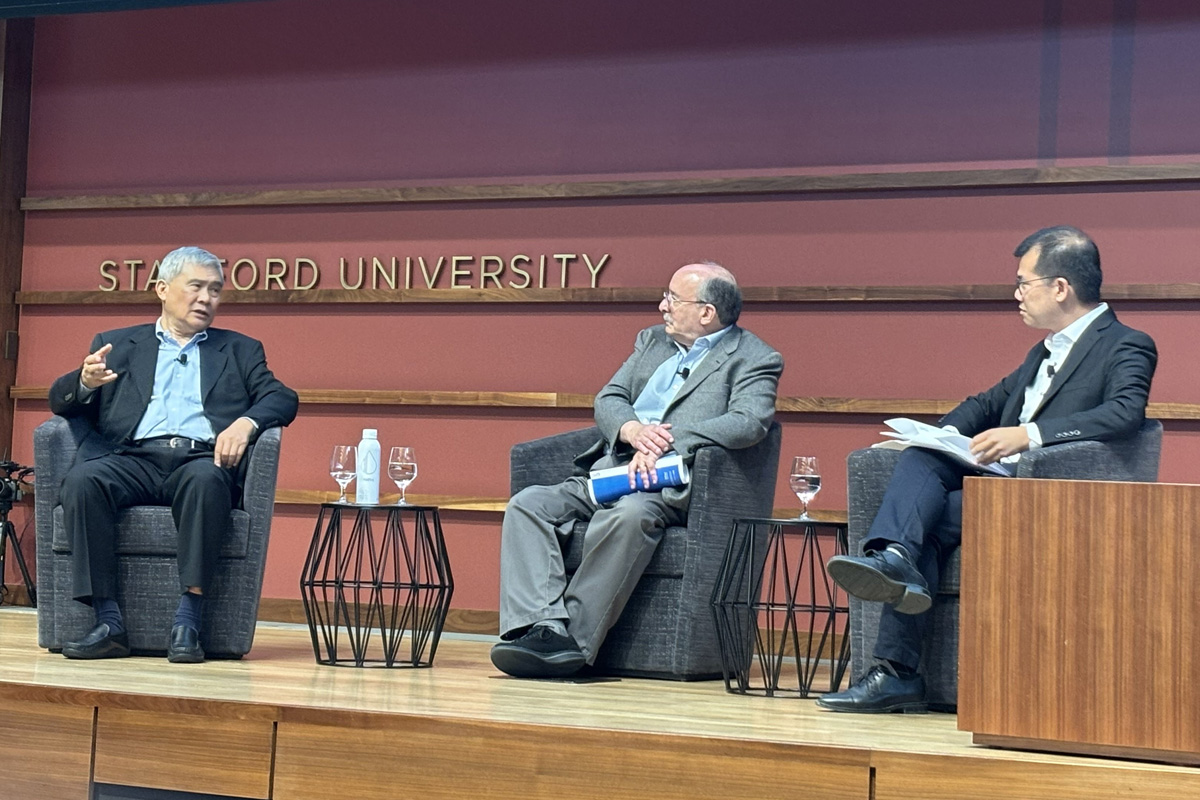 Former Delta Chairman Mr. Yancey Hai (left 1) joined Dr. Amory Lovins (middle) and Professor Will Chueh (right 1) at Stanford's Big Ideas Forum.
On October 4, Delta Americas welcomed around 80 faculty members and students from Stanford University's Doerr School of Sustainability to its LEED Platinum-certified, net-zero-carbon headquarters in Fremont, California. The visit began with an introduction to Delta's global ESG commitments and pathway of sustainable innovation. Through guided tours, participants witnessed firsthand how Delta integrates its cutting-edge technologies and Energy Management Systems (EMS) to realize comprehensive green building concepts and world-class sustainability outcomes.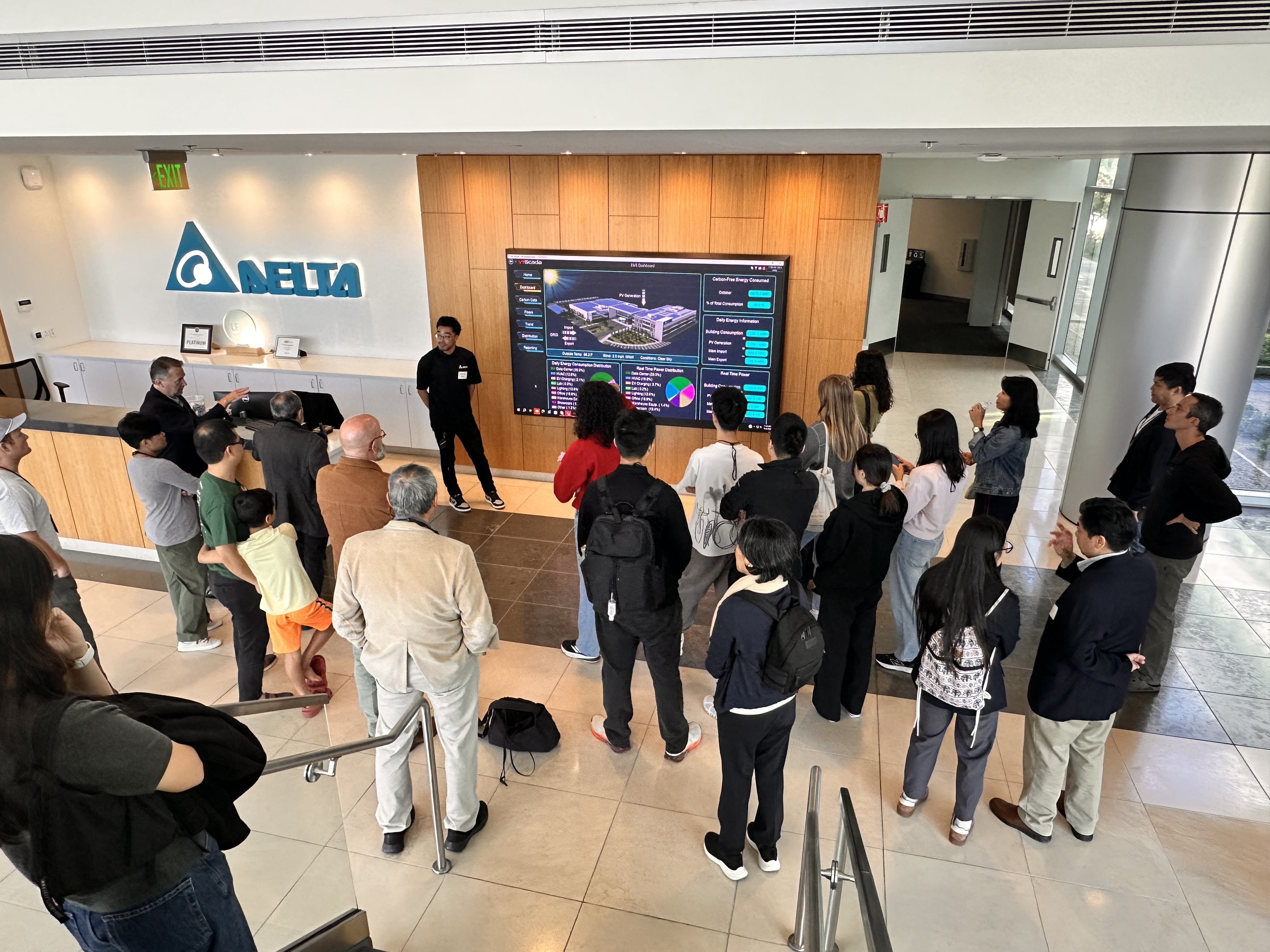 Stanford students gained firsthand insights into the company's net-zero building and integrated approach to sustainability and energy-efficient design.
Through interactive tours and exchanges, visitors were impressed by Delta's holistic design philosophy encompassing energy-efficient technologies, internal carbon pricing mechanisms, and renewable energy investments. The event fostered valuable industry–academia dialogue and demonstrated Delta's steadfast commitment to energy efficiency and innovation in action.
Together, these two exchanges embodied the shared belief between Delta and Stanford—that sustainability and profitability must progress hand in hand. Delta sincerely thanks Mr. Yancey Hai for his exemplary leadership in strengthening this partnership and looks forward to inspiring the next generation of leaders, deepening collaboration, and driving the future of energy efficiency and sustainable development.


