


2026/10
2026/04
Text by Corporate Sustainability Development Department
In the past, the concept of the circular economy was relatively unfamiliar to the general public. Even when awareness existed, it was not always translated into everyday actions. In October 2025, Taiwan’s Ministry of Environment released the draft “2050 Taiwan Circular Economy Roadmap,” establishing a framework for concrete regulations, policies, and industrial actions. Using 2020 as the base year, the roadmap sets targets across three key dimensions: decoupling economic growth from resource consumption, reducing per-capita resource consumption pressure, and increasing the share of circular materials in use. Guided by these policies, industries across sectors are expected to accelerate their transition, moving away from the traditional linear model of “take → make → dispose” toward a more sustainable and resilient circular system.
One certification, one circular journey
Delta had begun addressing the circular economy issue at an early stage. It collaborated with the value chain to implement circular economy activities across the stages of raw materials, energy resources, manufacturing processes, and waste treat, and it developed a circular economy management framework suited to Delta. From the product design and manufacturing stages, Delta aims to enhance the circulation of energy resources and to reduce greenhouse gas emissions in order to respond to global climate change.
One month after the release of the “2050 Taiwan Circular Economy Roadmap,” in November 2025, Delta became the first company in the global ICT industry to obtain ISO 59004 note 1 circular economy standard certification. The certification scope covers the Group’s overall circular economy management framework, including key activities such as circular procurement, circular design, process optimization, resource recovery and reuse, and waste management. The audit received the highest possible score of 5 out of 5, reflecting strong recognition of Delta’s efforts. Delta was also invited to attend the SGS 2025 Annual Awards Ceremony and Industry Exchange Forum. In addition to receiving the Sustainability Governance Award for the third consecutive year, the Company was further honored with the Innovation of the Year Award in 2025. The recognition highlights how Delta integrates circular economy thinking with global sustainability goals - such as energy and water conservation, waste reduction, carbon management, and biodiversity - while collaborating with its supply chain to create shared value.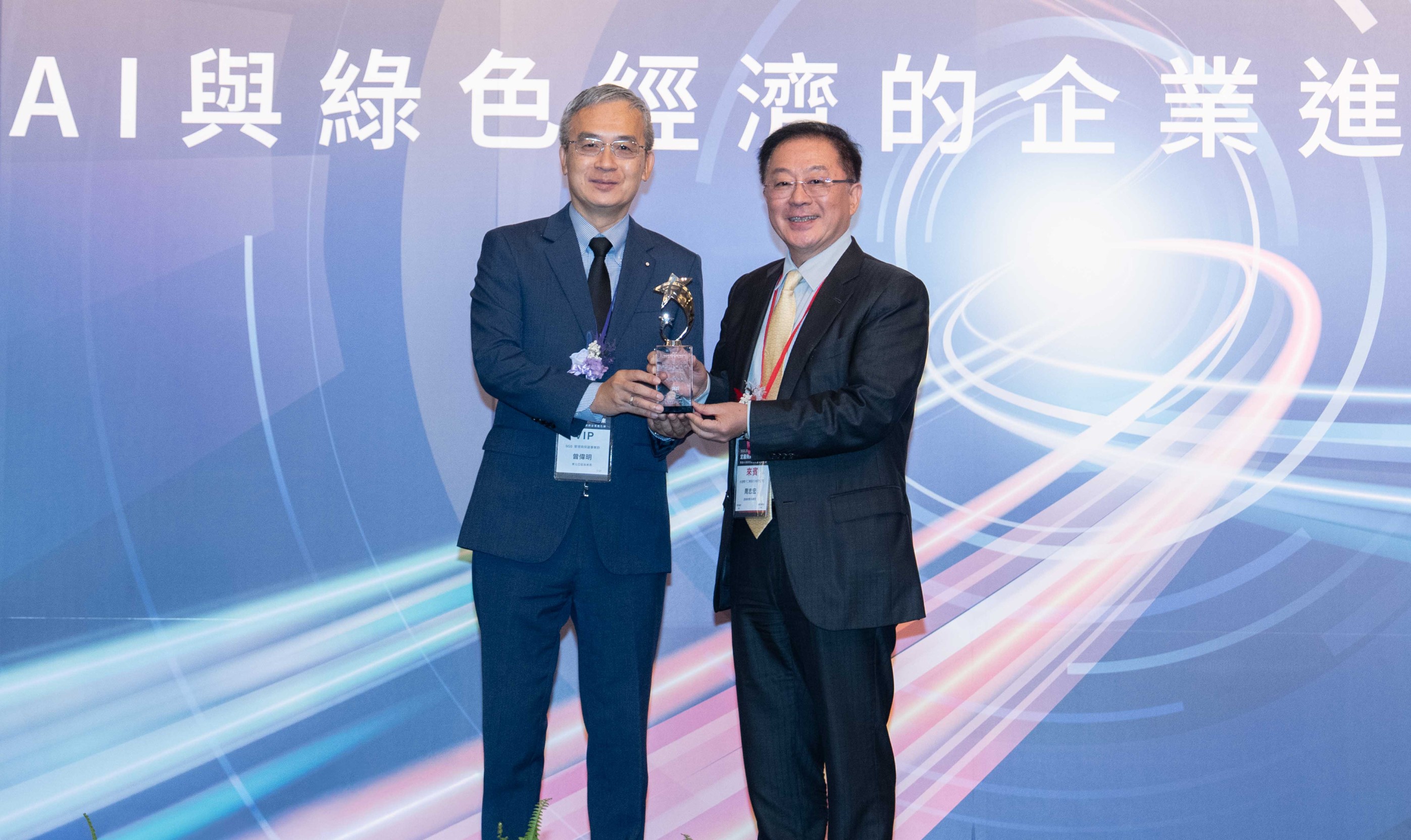 Delta obtained ISO 59004 circular economy certification and was honored with the “Innovation of the Year” award at the SGS 2025 Awards Ceremony. Jesse Chou, Delta’s Vice President and Chief Sustainability Officer (right), accepted the award on behalf of the Company.
Delta Vice President and Chief Sustainability Officer Jesse Chou said, " We are honored that Delta has taken the lead in the global ICT industry in obtaining ISO 59004 certification. The verification process examined and validated Delta’s existing circular economy strategies and implementation practices, aligning them with international ISO standards. Delta will continue to move forward steadily along its circular economy roadmap."
One goal, a company-wide initiative
Since 2016, Delta has established the Water Conservation and Waste Reduction Management Committee under its ESG Committee to promote sustainable resource utilization and ensure proper waste management. The Committee analyzes sources and types of waste generation and identifies opportunities for reuse by leveraging both internal and external resources. With the support of plant management, colleagues from departments including environmental protection, occupational safety, facility management, manufacturing, human resources, quality control, materials, procurement, and biotechnology have worked collaboratively to implement various water conservation and waste reduction initiatives. From 2018 to 2024, a total of 896 projects were carried out, resulting in approximately 1.307 billion liters of water saved and about 18,000 metric tons of waste reduced.
In 2019, Delta began introducing the UL 2799 note 2 zero-waste-to-landfilling standard at its Dongguan plant in China and progressively increased the number of certified sites each year. By 2024, a total of 18 production plants had received UL 2799 certification; among them, six plants had achieved the highest Platinum level, including the Dongguan plant, Wujiang plant, and Chenzhou plant in China, the Pingzhen plant in Taoyuan, and Cyntec Wuhu plant and Huafeng plant.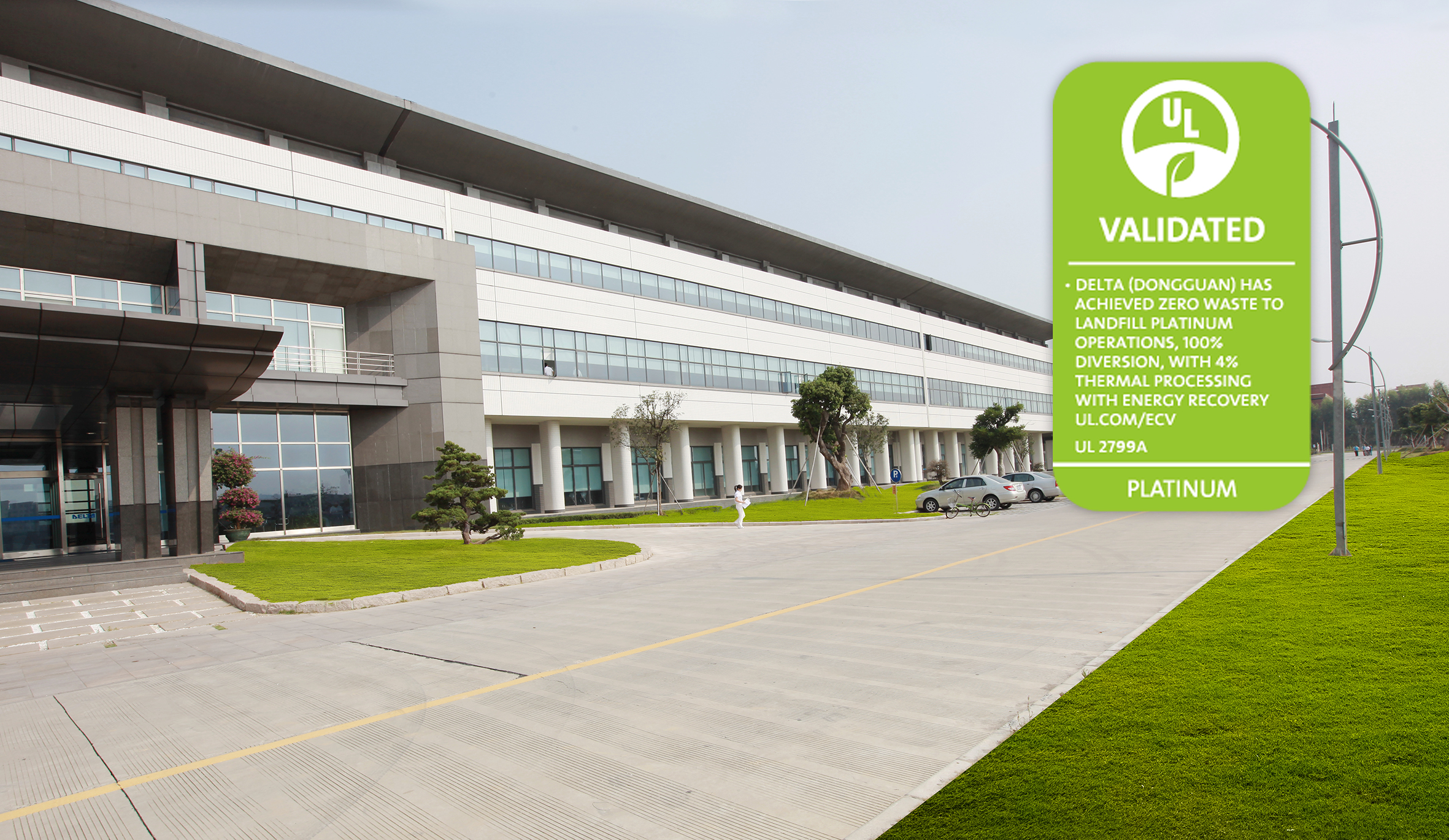 In 2019, Delta piloted the UL 2799 zero-waste-to-landfill certification at the Dongguan plant and achieved Platinum level, realizing 100% diversion of waste from landfill through resource recovery or energy conversion.
In 2022, Delta published the Delta Group’s Product Carbon Footprint Strategies and formulated four approaches for product circularity: circular product design, circular procurement and manufacturing, provision of circular services, and the creation of residual product value. In addition to reviewing product life cycle management, Delta has incorporated Circular Economy criteria into product design, for example by using renewable or recyclable materials in selected fan and streetlight products and by recycling packaging materials. At the same time, Delta has set clear targets, including the number of vendors among subcontractors supplying raw materials to critical suppliers that were certified for renewable/recycled materials - planned to reach 30 by 2030; a target that the waste conversion rate across all production sites would reach 100% by 2025; and a long term target that the waste conversion rate at global operation sites would reach 100% by 2050.
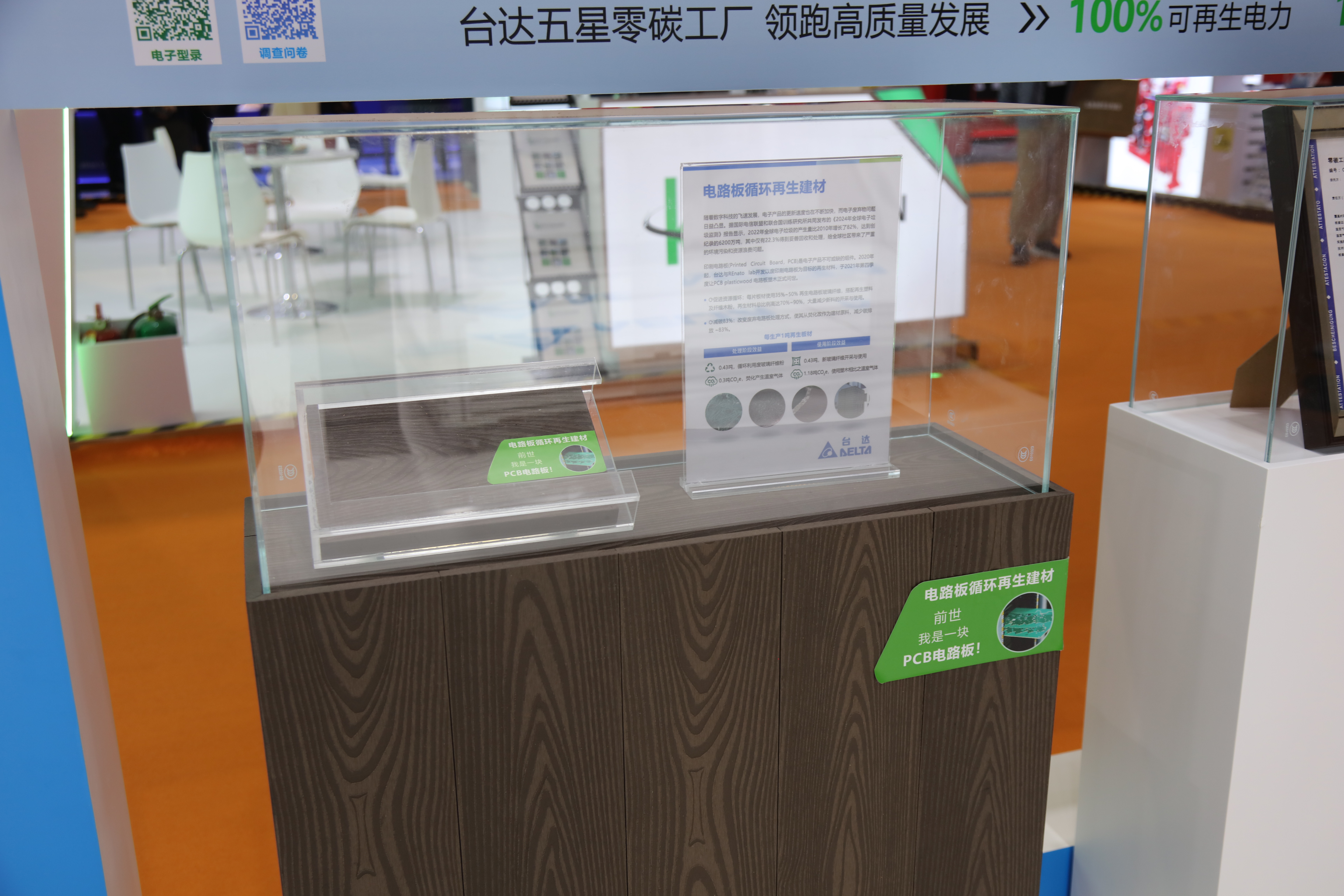 In 2020, Delta recycled waste PCB boards into wood-plastic composite materials, which were applied to building exterior walls and used in the green landscaping areas of Delta’s plants.
Delta continues to enhance its waste diversion rate through measures such as waste reduction, recycling, and reuse, thereby minimizing environmental impacts, promoting sustainable resource utilization, and helping prevent the depletion of the Earth’s resources. In 2024, waste generated from value chain activities across Delta’s global operations totaled 232,485 metric tons, of which 231,509 metric tons were diverted, achieving a 99.6% diversion rate. Revenue generated from recycled waste materials reached US$27.14 million. In addition, Delta supports circular economy initiatives through its internal carbon pricing mechanism and has established green product standards to further strengthen the implementation and effectiveness of circular economy practices across the organization, advancing the Company toward its 2050 net-zero target.
Note1 : ISO 59004 is an international standard published in 2024 that required companies to establish a comprehensive circular economy framework. Through a systematic approach, it aims to achieve resource regeneration, value retention, and value enhancement. The audit evaluates three dimensions of society, economy, and environment were examined to assess whether a company's circular economy framework had incorporated six core principles: systems thinking, ecological resilience, resource traceability, value creation, value sharing, and resource management.
Note 2 : UL 2799 is a certification standard for zero waste to landfill. It requires companies to manage, verify, and audit the destinations of all waste streams within their operations to ensure compliance. The standard confirms that waste undergoes diversion processes - such as reduction, recycling and reuse, or energy recovery - so that landfill disposal or incineration without energy recovery is avoided. Certification is granted when the overall waste diversion rate reaches 90% or higher.
2026/10

2026/08
2026/06
2026/02