

2026/10
2026/04
Text by Global Philanthropic Affairs Department
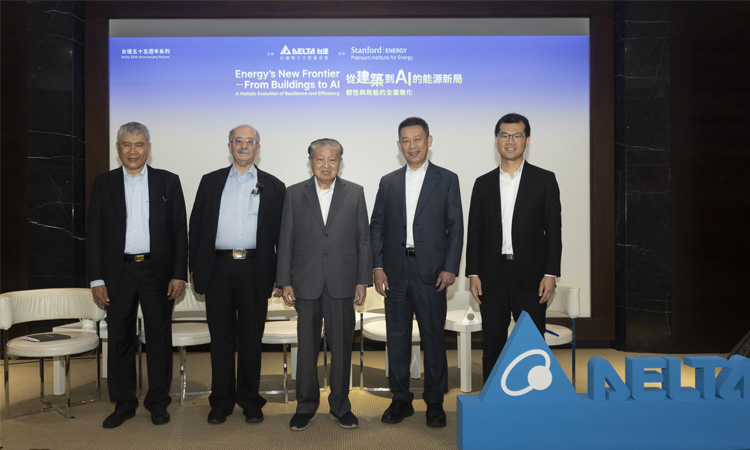
Marking its 55th anniversary in 2026, Delta is launching a series of events under the theme “Forward, Toward Better.” The program commenced with a forward-looking forum titled “Energy’s New Frontier: From Buildings to AI — A Holistic Evolution of Resilience and Efficiency,” jointly hosted with Stanford Doerr School of Sustainability's Precourt Institute for Energy.
After twenty years, Delta once again welcomed internationally renowned energy efficiency visionary Dr. Amory Lovins, Co-founder and Chairman Emeritus of Rocky Mountain Institute (RMI). Dr. Lovins delivered a keynote on Integrative Design and joined a panel discussion with Delta Founder and Honorary Chairman Bruce Cheng, Chairman and CEO Ping Cheng, and Board Director Yancey Hai.
Dr. Lovins has been an important inspiration in Delta’s sustainability journey. More than two decades ago, his book Natural Capitalism highlighted the energy-saving potential of green buildings. Inspired by these ideas, Founder Bruce Cheng championed green building initiatives at Delta, bringing this vision to life through 36 green buildings worldwide to date. As the AI era begins, data center power demand has become a global focal point. This forum focused on the energy challenges posed by rapid AI development, re-evaluating the central role of efficiency in future energy architectures and demonstrating Delta’s long-term commitment to addressing global transitions through technical innovation.
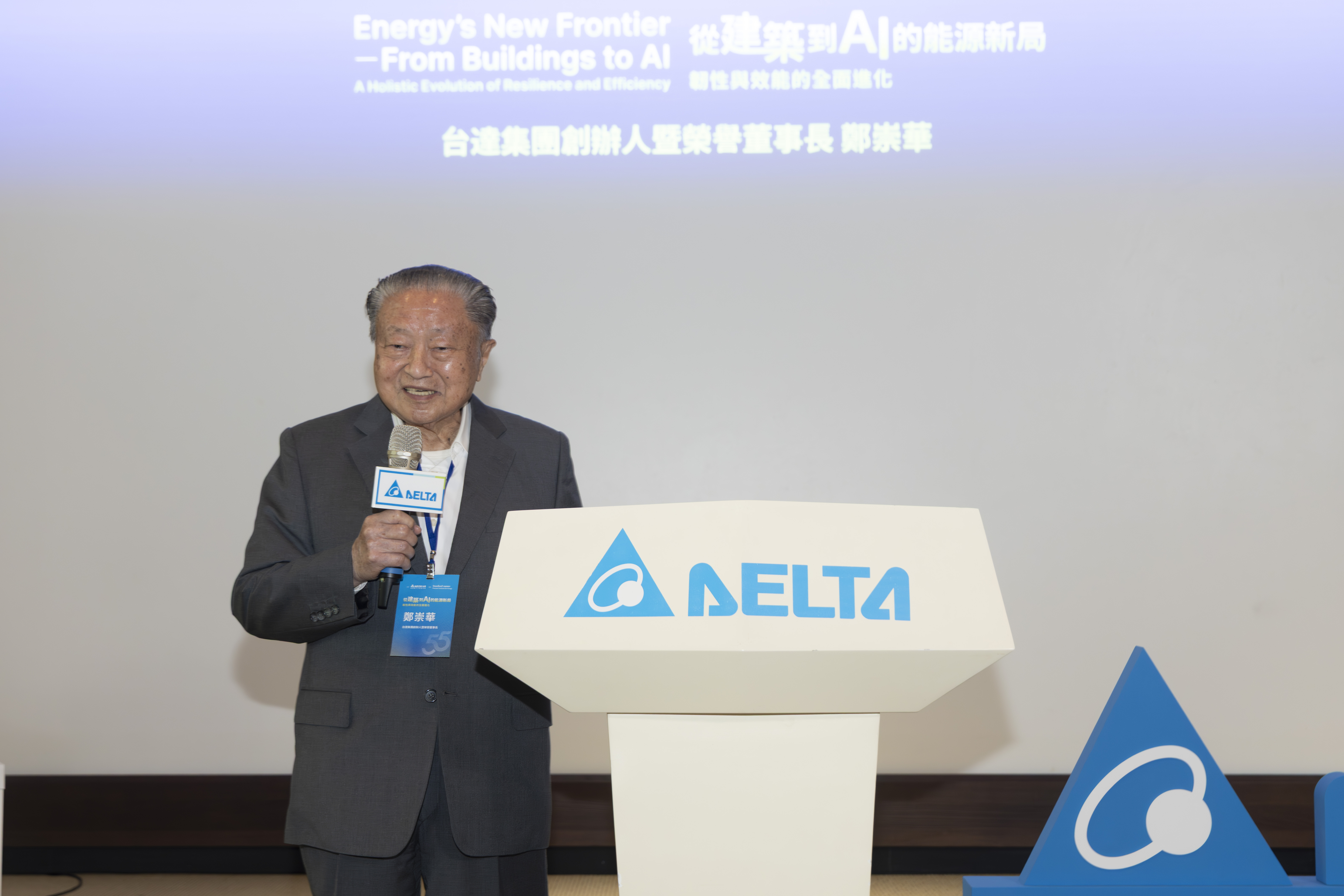
Delta Founder and Honorary Chairman Bruce Cheng honors Dr. Amory Lovins as the primary inspiration behind Delta’s sustainability journey.
According to the International Energy Agency (IEA), global data centers consumed approximately 1.5% of the world’s electricity in 2024. As initiatives like “AI for ALL” drive the adoption of smart technologies, power demand is certain to increase. Facing this trend, the forum posed a critical question: Will AI become an energy burden or an opportunity for a leap in efficiency? Delta chooses to lead with efficiency, emphasizing that through integrative design and electrification, smart systems can become more powerful, energy-efficient, and resilient.
From integrative design to smart systems: Efficiency is the honest answer
During his keynote, Dr. Lovins noted that what people truly need is not electricity itself, but the services it provides, such as comfortable environments, stable computing, and efficient production. Achieving the same or higher service quality with less energy creates “Negawatts,” which represent the cleanest and cheapest form of energy. Drawing on his experience with green buildings and industrial systems, Dr. Lovins explained that Integrative Design optimizes buildings and factories as whole systems, reducing loads and equipment capacity at the source. This holistic approach significantly lowers energy consumption and can reduce capital expenditures, achieving “increasing returns.”
This philosophy now extends to the fields of AI and data centers. The forum highlighted that when systems are designed for global optimization, incorporating high-efficiency power electronics, intelligent controls, and waste heat recovery, data centers do not necessarily increase grid pressure and can instead become vital nodes for stabilizing power systems. As a practitioner of this integrated mindset, Delta has long specialized in power management and power electronics, consistently improving conversion efficiency and system reliability from switching power supplies to energy management platforms.
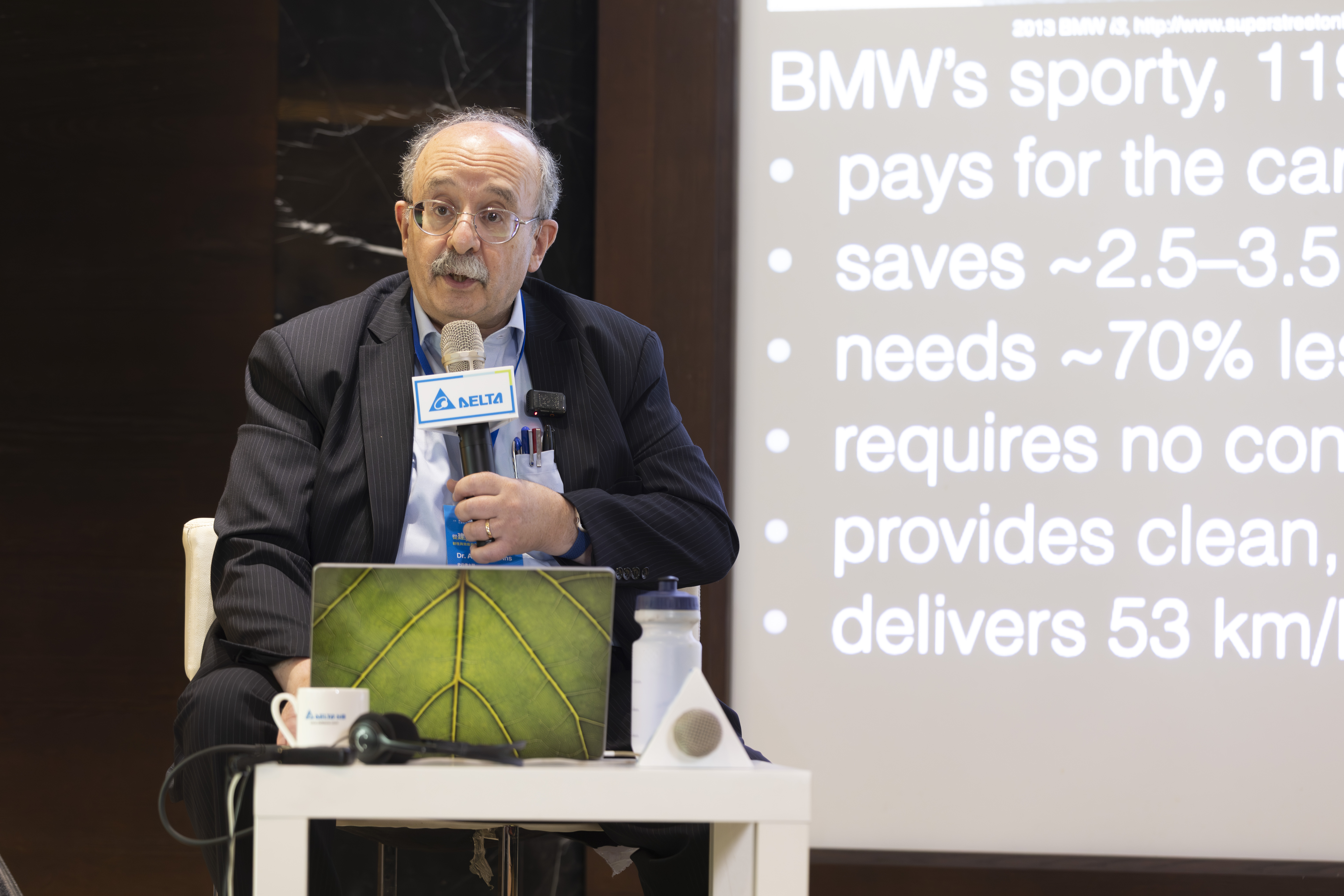
Dr. Lovins shared how “Integrative Design” can significantly enhance energy efficiency.
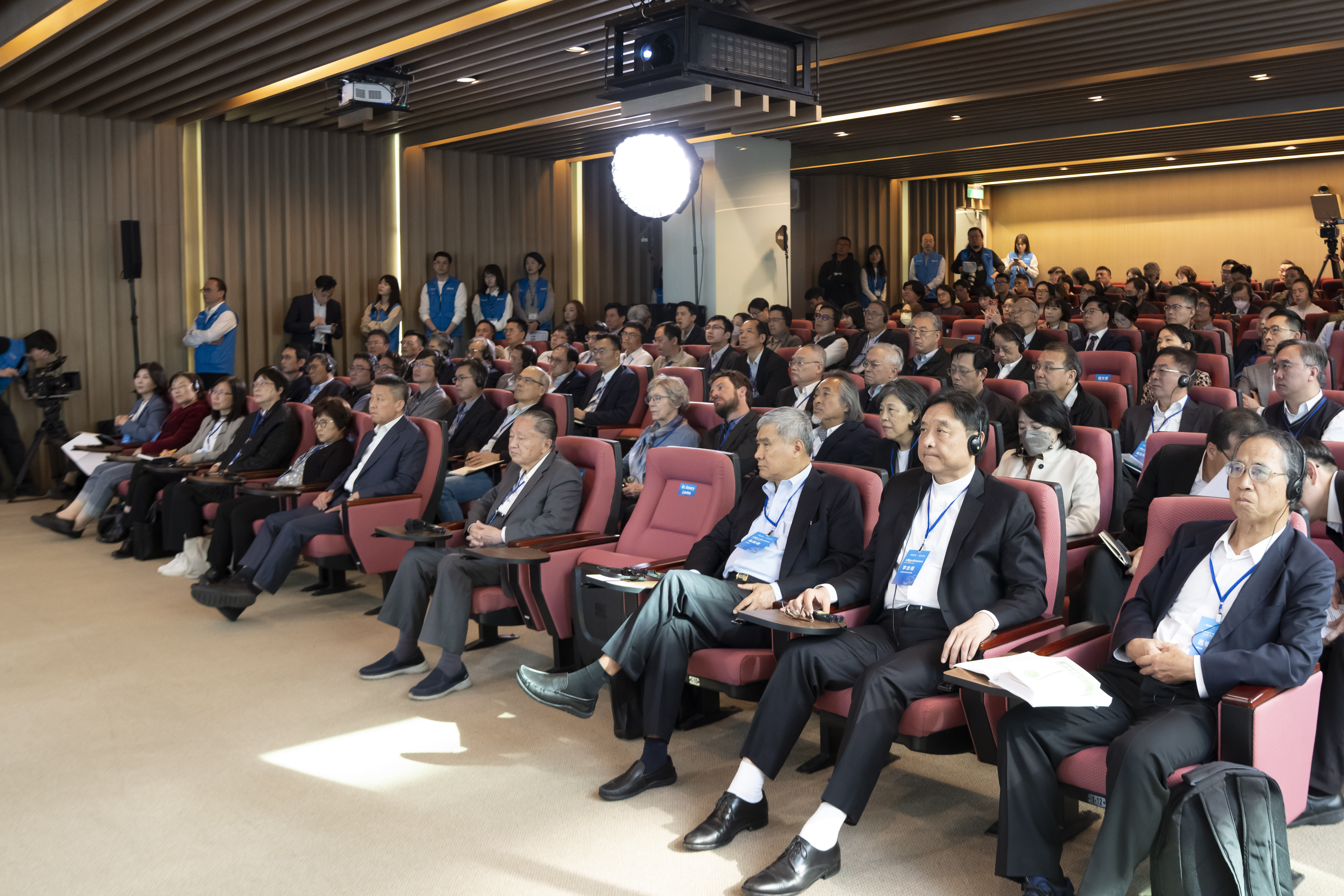
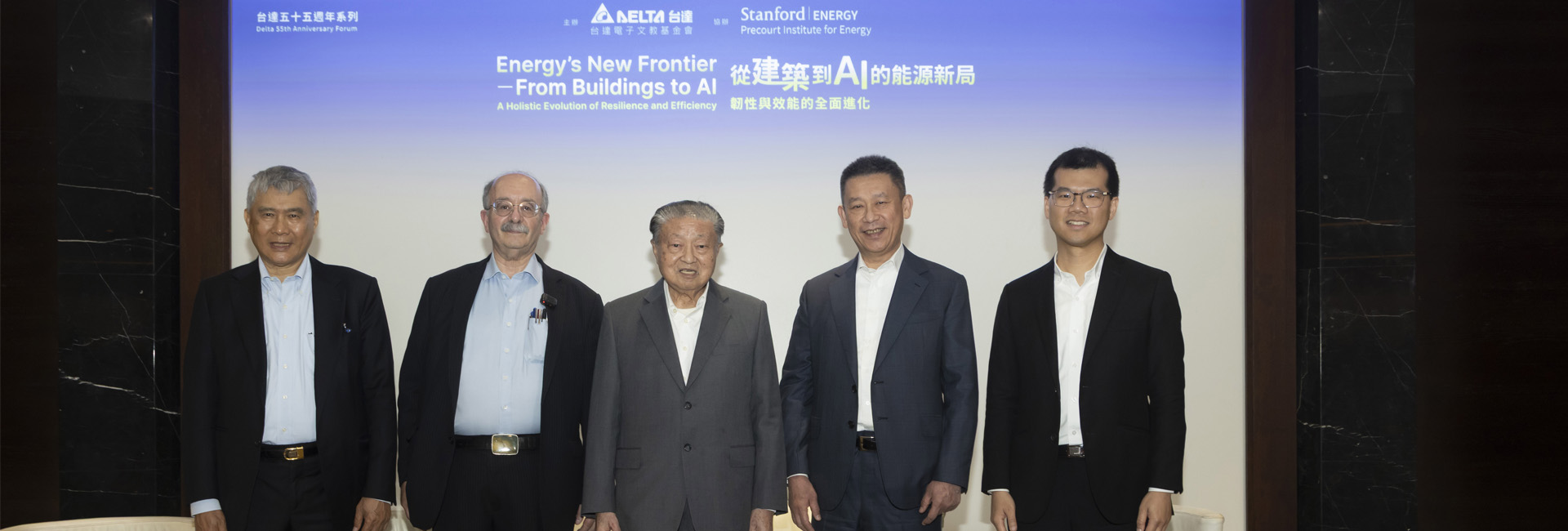
More than one hundred industry leaders and academic experts gathered for Delta’s 55th-anniversary forum.
Driving growth through efficiency: A resilient future in the AI era
During the panel discussion, Delta’s leaders shared their corporate practices. Founder Bruce Cheng reflected on Delta’s journey, stating that energy efficiency is a fundamental engineering discipline, while design and innovation can overcome limitations. Chairman Ping Cheng noted that since reaching peak carbon emissions in 2017, Delta has steadily reduced emissions beginning in 2018 while revenue continued to grow, demonstrating a clear decoupling of business growth from carbon emissions. Delta has further accelerated decarbonization through initiatives such as an internal carbon pricing mechanism. Through innovative technologies, Delta delivers energy-efficient solutions for data centers, microgrids, and other applications in the AI era. Board Director Yancey Hai shared that true breakthroughs often stem from “designing out the demand,” as systems become simpler when core technologies are inherently more energy-efficient.
The forum concluded with a core concept: Energy transition is not only a technical issue but also a shift in mindset and culture. As intelligent computing becomes ubiquitous, the key lies in managing and using energy more intelligently rather than simply expanding supply. For 55 years, Delta has remained dedicated to its mission: “To provide innovative, clean, and energy-efficient solutions for a better tomorrow.” From green buildings to data centers and AI infrastructure, Delta continues to use efficiency and sustainability as the foundation of its corporate advantage.
At this new starting point of its 55th anniversary, Delta’s forum declared its future direction: In the accelerating wave of AI and digital transformation, efficiency is more than a means of saving energy, it is the core of resilience and growth. For the next 55 years, Delta will continue to leverage its technical innovation and system integration capabilities to work with industry partners, creating a smarter, lower-carbon, and more resilient energy future.
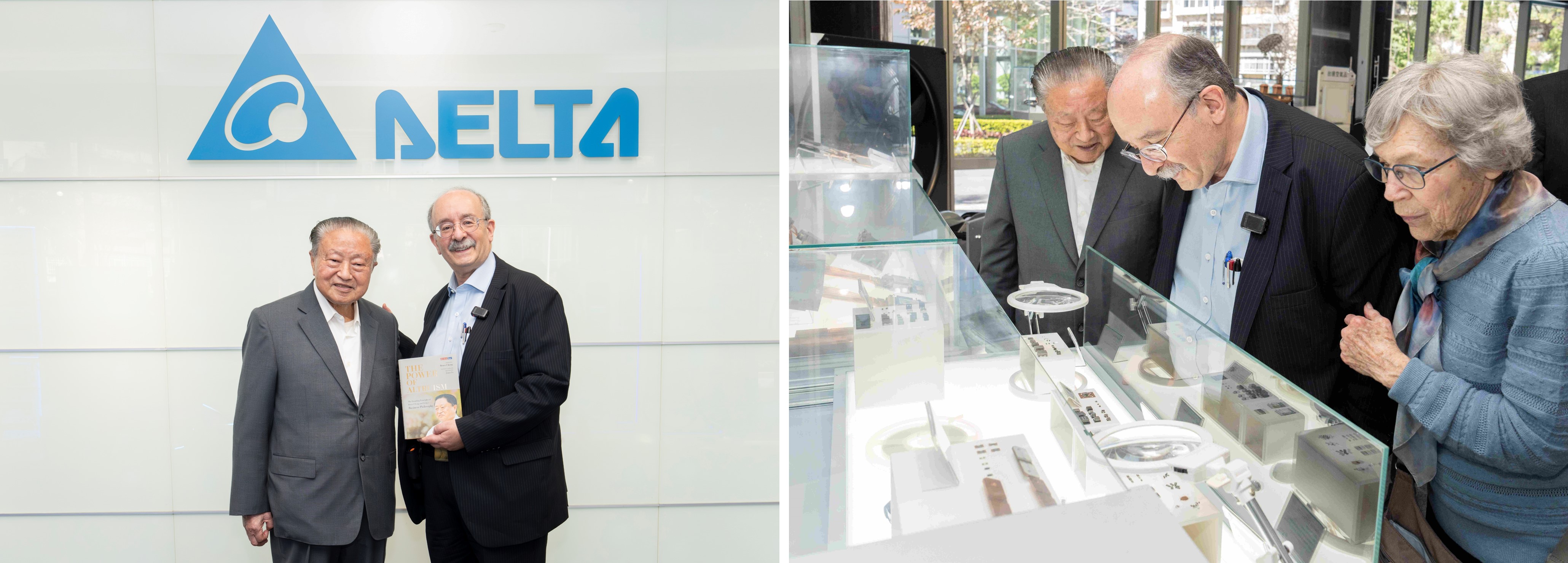 Left: Delta’s Founder and Honorary Chairman Bruce Cheng presented the book “The Power of Altruism” to Dr. Amory Lovins.
Right: Dr. Amory Lovins visited the Delta showroom and exchanged insights with Delta Founder and Honorary Chairman Bruce Cheng.
2026/10

2026/08
2026/06
2026/02