

2026/08
2020/08
IABG
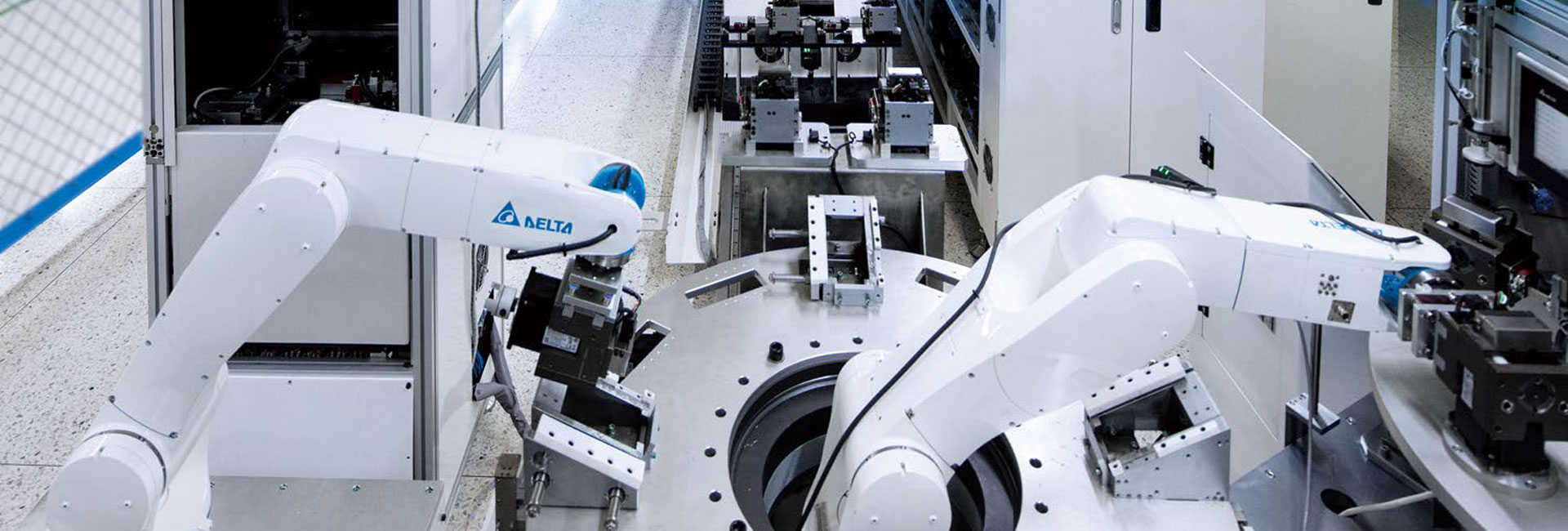
Energy management is one of the key indicators of energy savings and production capacity in many high-tech and semiconductor industries. According to Forbes, the best energy management deployment relies on precise energy monitoring of every section in the factory. Managers make energy strategies based on energy usage information and data. In the past, the importance of energy management was ignored in traditional factories, causing excessive energy consumption or uneven power distribution. Delta’s Smart Manufacturing System Integration Manager Patrick Yen pointed out that digitalization is the best solution for factory data visualization and smart energy management; however, it’s just not possible to evolve from manual recording on paper to a digital management system in one step.
OT & IT integration is the key to highly efficient energy management
The equipment in factories can be divided into manufacturing machines and factory operation equipment (a.k.a. the OT layer). Factory management systems are in charge of monitoring and handling water, electricity, gas and other energy during production (a.k.a. the IT layer). To achieve a digital factory, it is crucial to upgrade and integrate the OT and IT layers, so as to provide factory managers with real-time operation monitoring and valuable data analysis.
Aside from production efficiency and control, IT and OT integration also helps to realize factory energy management. In a traditional factory, managers receive an electricity bill every month telling them how much power the factory consumes; but the question of “which equipment / facility / production line consumes more electricity” remains.
Smart, green manufacturing relies on standardized communication
Building smart, green manufacturing systems is never easy, and it usually starts from production line design. Power meters for power measurement, sensors for machine information collection and diagnosis, and industrial switches / cloud routers for communication and data exchange need to be included for all equipment and process design on every production line.
Communication standardization is another critical issue for implementing smart, green manufacturing systems on production lines and in factories. The components and equipment of different brands adopt different protocols, making machine integration difficult.
With standardized communication, energy consumption data can also be collected for monitoring and management. In new factories, energy monitoring and management for each piece of equipment can be achieved at the design stage by installing power meters and sensors.
“From design to implementation of smart, green manufacturing, we faced different challenges and realized how complicated and difficult this path could be. We had to set a goal and be well prepared for whatever might come our way. If not, it was very likely that we could have delayed the production schedule or even failed,” said Patrick.
Smart, green manufacturing brings visualization to managers
To achieve digitalization, a company needs to seamlessly integrate OT and IT to acquire operation data for analysis and visualization to help managers’ strategies. Patrick said, “Delta provides a one-stop-service that covers consulting, design, implementation and after-sales / maintenance service. It satisfies customer needs for smart production and factories while reducing both cos and all the troubles encountered going from one supplier to another.”
The key to achieving smart manufacturing is IT and OT integration based on standardized communication between equipment and a management platform. Delta’s DIALink platform can connect equipment to the man[1] agement platform and perform edge comput[1] ing and data exchange The DIAMMP platform can analyze equipment and production data and provide visualized information for different users, such as alarms for equipment engineers, PQM panels for production line managers, production information for factory managers, and a control center at headquarters.
For now, most Delta factories have implemented smart manufacturing solutions based on standardization,rationalization, automation, and intelligence. Delta’s real practice and experience bring outstanding support and benefits to customers.

Delta recently offered its one-stop-shop service and smart green solutions for a global footwear manufacturer. Footwear manufacturing processes have always been complicated and hard to automate. The company’s factory in Vietnam used to rely mainly on labor for production. However, it is difficult to precisely control the foaming formula for every batch.
After implementing Delta’s smart machines, the quality control issue was solved with automated, precise material feeding according to formula. The automated material delivery by AGVs—which adopt Delta’s automation products—helped to enhance production efficiency as well. Delta also installed sensors, measurement meters and industrial Ethernet switches to all machines at this factory to collect and upload operation data to Delta’s management platforms in real-time. In this case, four operators were reduced and the production cycle time was shortened. Patrick concluded, “These solutions also helped another customer in the traditional manufacturing industry by saving 30% on their energy costs and reducing quality issues to a remarkable degree.”

Delta’s smart, green technology and solutions bring visualization to real-time equipment operation and enhance energy efficiency for factories
2026/08
2026/06
2026/04
2026/02