

2026/10
2025/12
Text by PESBG

The AI era is redefining the way energy is generated and distributed, as power grids evolve from one-way supply systems to intelligent architectures characterized by multi-source, decentralized, and bidirectional energy flows. Facing the dual challenges of high energy consumption and sustainable transformation, intelligent energy management has emerged as a key trend.
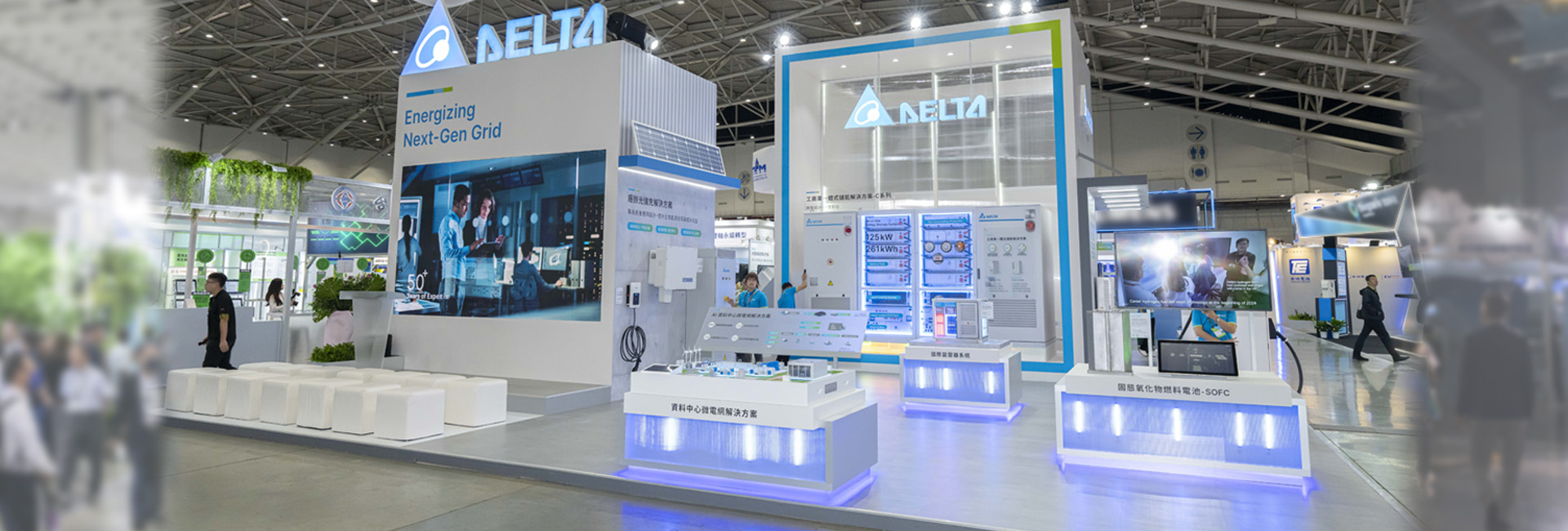
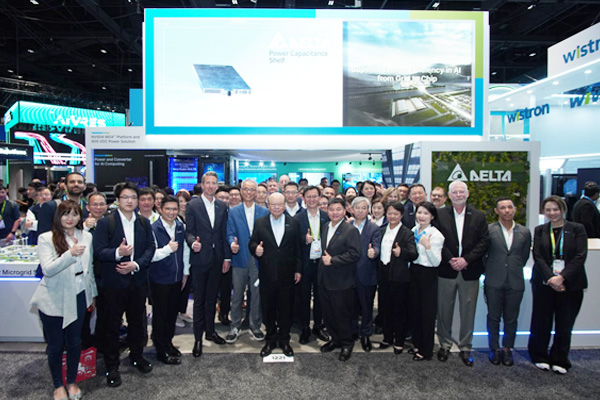
Under the theme “Powering Sustainability and Shaping the Future,” Delta participates in Energy Taiwan 2025 to showcase its latest AI data center microgrid solutions, which integrate renewable energy, energy storage, and charging infrastructure. The exhibition highlights Delta's comprehensive intelligent energy ecosystem spanning data centers, energy-intensive industrial and commercial facilities, grid-level applications, and hydrogen technologies—demonstrating its full-spectrum capabilities and professional services across energy generation, storage, and utilization. Delta management and staff at the Energy Taiwan 2025 exhibition booth
With the rapid global expansion of data centers driven by AI, a single campus can consume hundreds of megawatts of electricity, imposing increasingly stringent requirements on power quality and stability. In response, Delta unveiled its "AI Data Center Microgrid Solution" for the first time—an integrated system that combines diverse energy resources and delivers millisecond-level responsiveness to AI workload fluctuations. This ensures power quality and system stability even under intensive computing conditions, further strengthening operational resilience and showcasing Delta's technological depth and forward-looking vision in the field of smart energy.
Eton Lee, Vice President and General Manager of Delta's Power and Energy Solutions Business Group, stated, “As we enter the new AI energy era, power infrastructure has become the core of operational resilience.” He pointed out that large-scale data centers have traditionally relied on conventional power grids, with planning and construction often taking five to ten years. However, with the rapid advancement of AI applications, Delta's AI data center microgrid solutions can significantly shorten the deployment timelines, offering a key solution that balances power stability and competitiveness. With decades of expertise in energy infrastructure and strong system integration capabilities, Delta is committed to helping enterprises achieve stable, efficient, and sustainable energy transformation in the AI era.
AI data center microgrid solution
At the core of Delta's Microgrid Solution are its Energy Storage System (ESS) and Microgrid Controller, which integrate multiple energy sources such as solar power, generator sets, and hydrogen fuel cells. The system can respond within milliseconds to 100% AI load fluctuations while maintaining voltage stability. Through hardware-software integration, it supports complex microgrid environments and employs power plant-grade modeling and simulation to optimize power flows. Moreover, in line with the shift toward high-voltage DC (HVDC) in AI data centers, the solution incorporates a solid-state transformer as the DC coupling core. This design achieves up to 98.5% energy efficiency, seamlessly streamlining AC to DC conversion and reducing the number of stages and losses.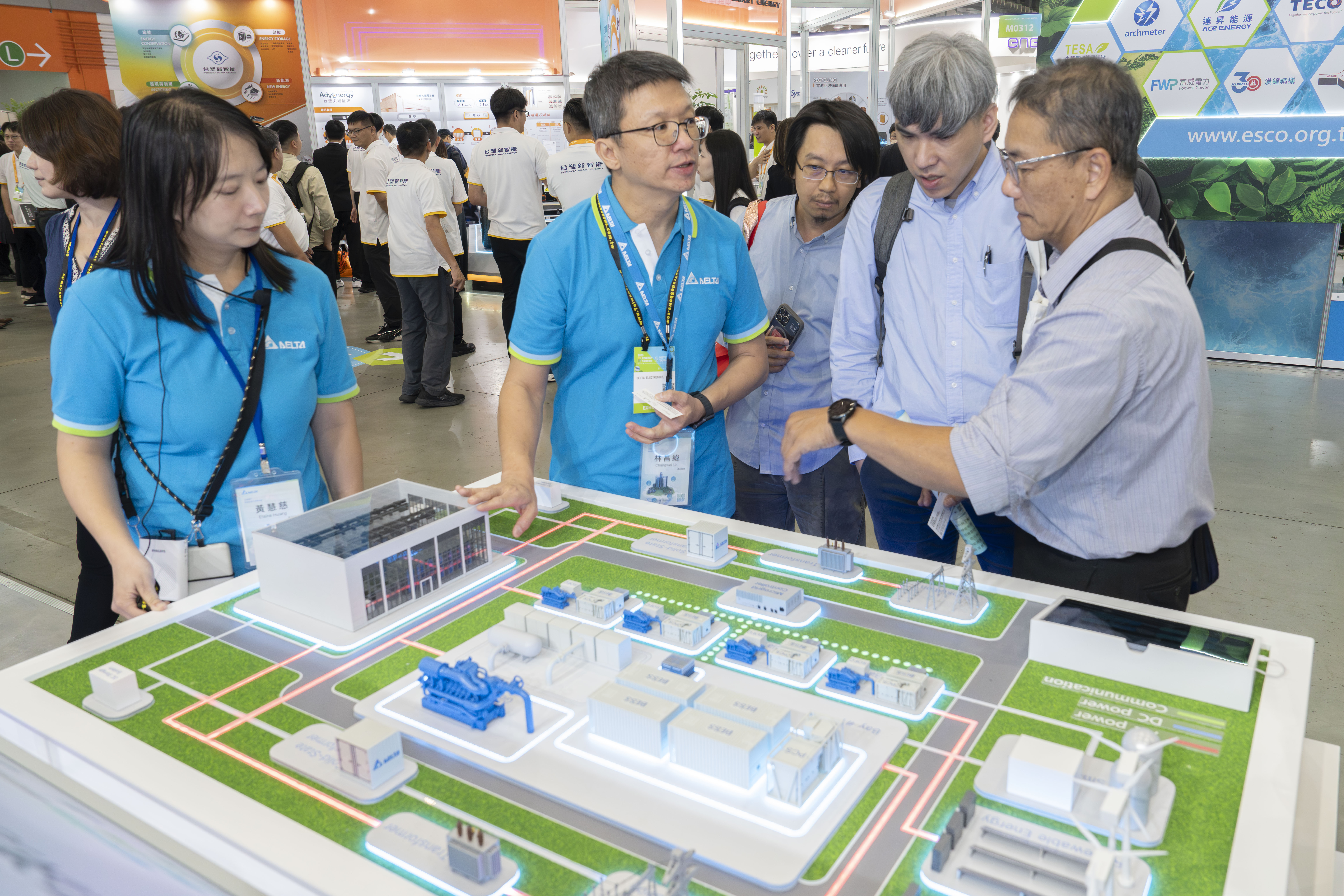 Delta showcases its latest “AI Data Center Microgrid Solution” attracting crowds of visitors at the exhibition
Energy-intensive energy solution for C&I
Amid rising electricity costs and the dual challenges of sustainability transformation, Delta has launched its AI-enabled energy solution for industrial and commercial campuses. At its core is the Delta C Series all-in-one C&I energy storage system, a fully liquid-cooled design that integrates a power conditioning system, battery modules, and controllers. Each cabinet provides 125 kW / 261 kWh, enabling rapid deployment and modular expansion. The lineup includes C-type (pairs with the DH60C hybrid PV inverter for PV-plus-storage) and C+-type (supports DC-coupled PV arrays). Combined with AC Gen5 chargers and AI-based scheduling, the system helps enterprises reduce demand-charge exposure and avoid contract overrun penalties during peak periods. In addition, Delta's Energy-as-a-Service advisory—covering green-power procurement, energy diagnostics, and decarbonization planning—turns sustainability commitments into auditable performance.
Utility-scale deployments
For utility-scale deployments, the Delta U Series—a 5-MWh-class, all-in-one ESS—integrates liquid-cooled power electronics and batteries in a 20-ft container, shortening site construction and commissioning timelines. To absorb surplus renewables, Delta also provides high-efficiency power supplies for electrolyzers and SOEC (solid oxide electrolysis) solutions that convert green electricity into hydrogen, subject to operating conditions. Eton Lee (right 2), Vice President and General Manager of PESBG, and Chris Lai (left 1), Head of Global Sales & Marketing of HEBD, introduced Delta's SOFC hydrogen fuel cell solution to Taiwanese officials.
MW-class heavy-duty charging & AI-driven charger health platform
As heavy-duty transport electrifies, operators must address both megawatt-class charging and day-to-day O&M. Delta's DC fast-charging systems deliver up to 1 MW, enabling heavy trucks to recharge in about 30 minutes, reducing dwell time and sustaining operations. On the operations side, Delta's Charger Health Management Platform applies AI for real-time monitoring, FOTA updates, and automated alerts—tracking charging success rate, station utilization, availability, and other KPIs to improve site reliability and service quality.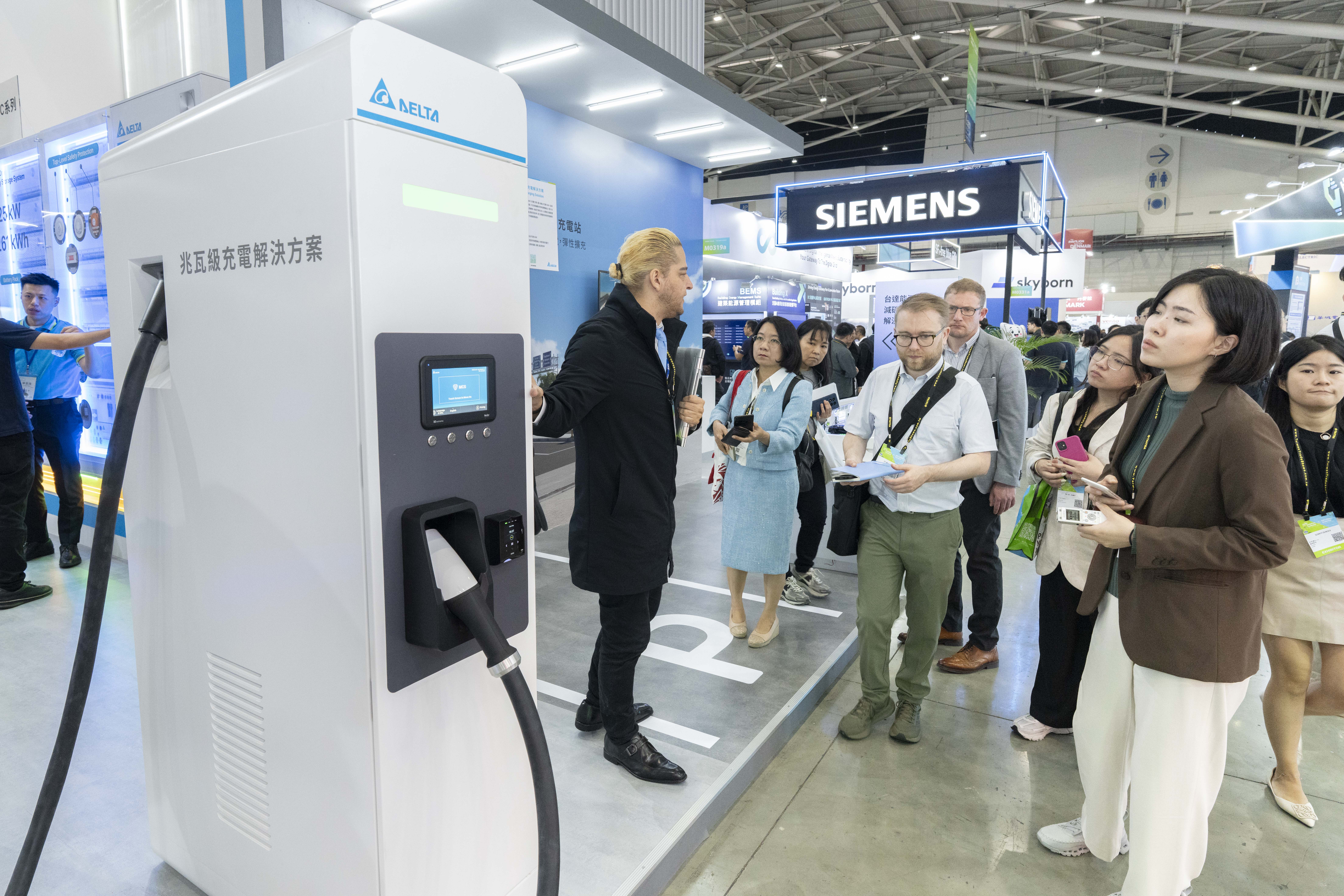 MW-class heavy-duty fast charging solution attracts attention from international media visitors.
As AI drives a rapid surge in global energy demand, power systems are shifting from traditional one-way supply toward a new paradigm of multi-source integration, flexible dispatch, and intelligent management. In response to this trend, Delta will continue leveraging its strengths in power electronics, energy storage, and system integration to provide more agile and reliable smart energy architectures—helping enterprises navigate the challenges of a high-consumption era and enhance operational resilience.
2026/10

2026/08
2026/06
2026/04